



Artificial Grass for Outdoor Restaurant Patios: The 2026 Hospitality Design Guide
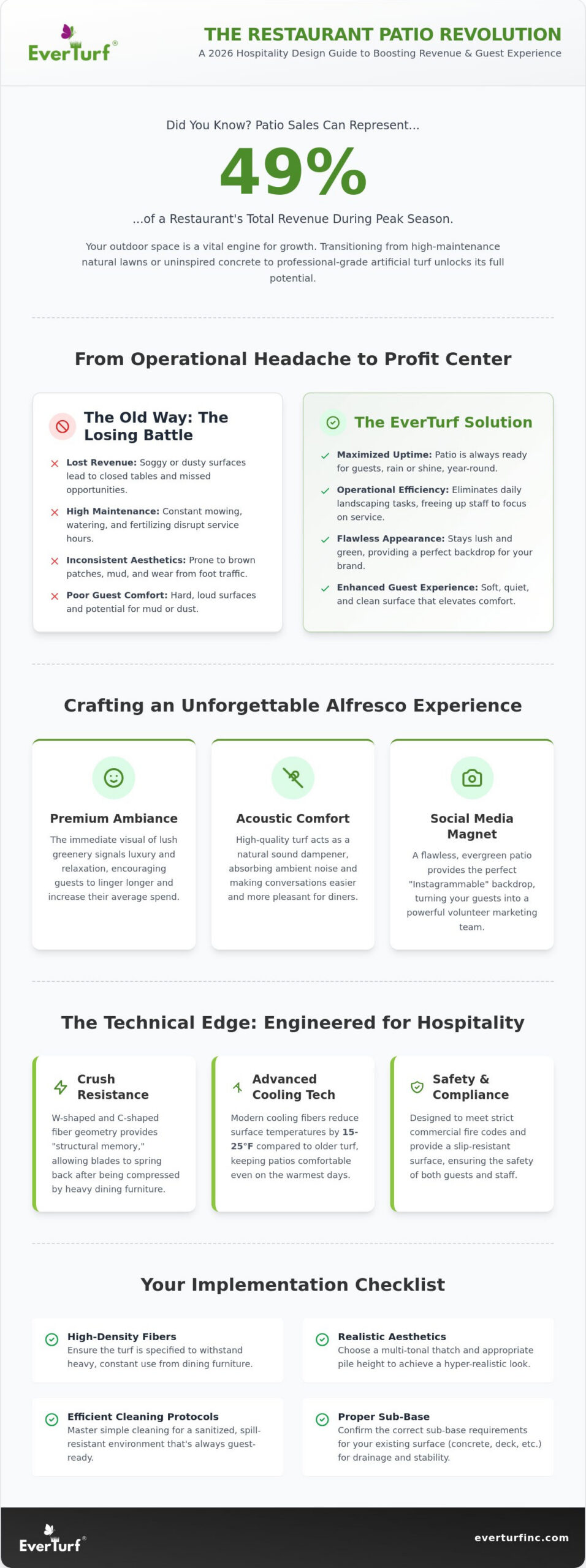
Did you know that for many full-service restaurants, patio sales can represent up to 49% of total revenue during peak season? You already know that your outdoor space is more than just extra seating; it’s a vital engine for your business growth and a primary draw for guests seeking an alfresco experience. Yet, maintaining a pristine natural lawn often feels like a losing battle against heavy foot traffic and unpredictable weather. Every hour a table remains closed because of a soggy surface or an unattractive, dusty concrete patch is a missed opportunity to delight a customer and boost your bottom line. Transitioning to professional-grade artificial grass for outdoor restaurant patios allows you to reclaim those lost hours while creating a lush, inviting sanctuary that stays green and functional year-round.
This 2026 hospitality design guide reveals how high-performance synthetic turf transforms high-traffic areas into sophisticated, low-maintenance escapes. You’ll discover how the latest cooling-fiber technologies and realistic blade shapes enhance guest comfort even on the warmest summer days. We’ll also walk through critical compliance standards, from ADA accessibility to the latest 2026 environmental regulations, ensuring your investment is as durable as it is beautiful. Get ready to envision a more profitable and stress-free version of your establishment’s outdoor experience that prioritizes both style and operational efficiency.
Key Takeaways
- Understand how lush greenery creates a premium atmosphere that encourages guests to linger and increases table turnover throughout the year.
- Identify the specific technical requirements for artificial grass for outdoor restaurant patios, including the high-density fiber shapes needed to withstand heavy dining furniture.
- Learn how to choose the right multi-tonal thatch and pile height to achieve a hyper-realistic aesthetic that complements your brand’s unique style.
- Master efficient cleaning protocols for EverTurf Artificial grass to ensure a sanitized, spill-resistant dining environment that remains pristine after busy shifts.
- Discover the essential sub-base requirements for installing synthetic turf over existing surfaces like concrete or wood decks to ensure long-term drainage and stability.
Elevating the Guest Experience with Synthetic Turf
Imagine a guest approaching your restaurant on a busy Saturday evening. Before they even see a menu, they encounter a vibrant, lush expanse of green that feels like an oasis in the middle of a concrete landscape. This immediate visual cue triggers a deep psychological sense of relaxation and luxury. Greenery isn’t just a decorative choice; it’s a mood setter that signals a premium experience. By integrating artificial grass for outdoor restaurant patios, you’re creating a sanctuary where diners feel invited to unwind. This connection to nature, even in an urban setting, encourages guests to linger over a second glass of wine or an extra dessert, directly impacting your average check size.
Beyond the visual allure, synthetic turf offers a functional acoustic benefit that many operators overlook. Busy patios are often loud, with the clatter of silverware and the hum of nearby traffic bouncing off hard concrete or brick surfaces. High-quality turf acts as a natural sound dampener, absorbing ambient noise and making conversation easier for your guests. For a comprehensive overview of artificial turf and its evolution into sophisticated commercial applications, it’s clear that modern materials prioritize this kind of sensory comfort alongside durability.
The Aesthetic ROI of a Green Patio
Every square foot of your property should generate value. Many restaurants struggle with “dead zones”—those uninspired concrete slabs or gravel patches that guests avoid. Transforming these areas with EverTurf Artificial grass turns underutilized space into high-value seating. Unlike natural sod, which quickly develops brown patches under heavy foot traffic or muddy ruts after a light rain, synthetic surfaces remain flawless. This consistency is vital for your brand’s visual identity. A lush, evergreen patio provides a perfect backdrop for social media “Instagrammability,” essentially turning your guests into a volunteer marketing team that showcases your beautiful environment to thousands of potential customers online.
Maximizing Patio Uptime
In the hospitality industry, time is literally money. Traditional landscaping requires constant attention: mowing, fertilizing, and daily watering schedules that often clash with service hours. You’ve likely dealt with the frustration of “closed” sections because the grass is too wet or the smell of fresh fertilizer is too strong for diners. Transitioning to a synthetic solution eliminates these operational hurdles entirely. Your patio is always ready for guests, regardless of the season or the previous night’s weather. Morning prep time for your staff is reduced to a quick leaf blowing or light rinse, allowing your team to focus on service rather than yard work. This reliability ensures you never miss a peak dining window due to maintenance delays.
Performance Specs for High-Traffic Hospitality Patios
Selecting the right material for a commercial environment requires a focus on resilience that goes far beyond residential standards. When we define “Commercial Grade” in the context of EverTurf Artificial grass, we’re talking about a product engineered to withstand thousands of footfalls and the constant shifting of heavy dining furniture. The secret lies in the blade geometry. Utilizing W-shaped or C-shaped fibers provides a structural memory that allows the grass to spring back into place after a chair is moved. This crush resistance ensures your patio looks as manicured at the end of a busy Saturday night as it did during the first lunch seating.
Guest comfort is the heartbeat of the hospitality industry. While older synthetic products were known for retaining heat, the 2026 generation of turf features advanced cooling-fiber technology. These innovations can reduce surface temperatures by 15-25 degrees compared to standard turf, keeping your outdoor space inviting even during the peak of summer. Safety is equally paramount. High-quality installations must meet strict fire codes and provide a slip-resistant surface that protects both guests and staff. For a deeper look at the technical standards involved, reviewing the health and safety of artificial turf provides essential context on material non-toxicity and heat management in public spaces.
Superior Drainage for Rapid Table Turnover
Rain doesn’t have to mean a lost shift. Advanced backing systems in professional artificial grass for outdoor restaurant patios allow water to percolate at incredible speeds, often exceeding 30 inches per hour. This is significantly faster than natural sod, which quickly becomes a muddy liability, or traditional pavers that can develop stagnant puddles. Because the surface stays dry and puddle-free, your team can wipe down tables and reopen the patio minutes after a downpour ends. This rapid recovery keeps your floor plan optimized and ensures your revenue stream remains uninterrupted by the weather.
Durability Against Commercial Wear and Tear
Restaurant patios face unique stressors like high-heeled shoes and heavy metal table legs that would destroy natural grass or scar expensive wood decking. Professional-grade turf is built with UV stabilization to ensure the vibrant green doesn’t fade into a dull, sun-bleached hue. To maintain this integrity, the application of EverTurf Infill is vital. It acts as a protective cushion for the fibers, preventing them from matting while providing the necessary weight to keep the entire installation stable under heavy commercial loads. If you’re ready to elevate your establishment, a professional artificial turf installation offers the permanent, high-performance solution your business deserves.
Selecting the Ideal Artificial Grass for Your Restaurant Style
Design choices in the hospitality sector serve a dual purpose: they must captivate the eye while enduring the rigors of high-volume service. When selecting artificial grass for outdoor restaurant patios, the goal is to create a space that feels organic and high-end rather than clinical. This starts with sophisticated color blending. Modern premium turf uses a multi-tonal thatch system, incorporating varying shades of field green, lime, and tan. This depth of color ensures that your patio looks realistic under both the bright midday sun and the warm glow of evening string lights, avoiding the flat, plastic look of lower-quality alternatives.
While aesthetics drive the initial choice, understanding the environmental impacts of synthetic turf is essential for a responsible design. Factors like heat retention and water management should guide your choice of infill and drainage layers. By selecting a product with integrated cooling technology and high-flow backing, you ensure your beautiful patio remains a comfortable and sustainable asset for years to come. The tactile experience also matters. You want a surface that feels soft to the touch for guests in sandals but remains resilient enough to stay upright after a long day of hosting diners.
Pile Height and Density Considerations
In a dining environment, longer isn’t always better. While a tall, shaggy pile might look lush in a residential backyard, it can be a challenge for a busy server or a guest in high heels. The “sweet spot” for commercial restaurant patios typically falls between 1.25 and 1.5 inches. This height provides enough cushion to feel luxurious underfoot while remaining upright under the weight of heavy bistro chairs. Look for a high face weight, which indicates a denser concentration of fibers. A dense pile prevents food debris from sinking deep into the turf, making it much easier for your staff to maintain a hygienic environment between shifts.
Designing with EverTurf Pavers
For a truly flagship aesthetic, consider an integrated hardscape approach. Combining synthetic turf with EverTurf Pavers allows you to create sophisticated checkered patterns or clearly defined dining “islands.” This isn’t just a stylistic choice. Placing stone or concrete pavers in high-traffic server paths or under heavy communal tables reduces localized wear on the grass fibers. This hybrid design gives your patio a custom-architectural feel that sets your establishment apart from competitors who rely on basic concrete or simple decking. It’s a strategic way to guide guest movement while maintaining that refreshing, year-round greenery.
Maintenance Protocols for a Pristine Dining Environment
Cleanliness is the silent ambassador of your restaurant’s brand. While you’ve moved away from the constant demands of natural lawn care, maintaining a high-traffic hospitality surface requires a targeted, efficient rhythm to keep it guest-ready. A daily routine is remarkably simple. Start each morning with a quick pass of a leaf blower to remove organic debris. Follow this with a light water rinse to clear away dust and keep the fibers looking vibrant. This small investment in time ensures that when the first lunch guests arrive, they’re greeted by a space that feels fresh and meticulously cared for.
Periodic professional grooming is also a wise choice for flagship locations. Over time, the weight of communal tables and constant foot traffic can begin to compress even the most resilient fibers. A professional power brush service once or twice a year lifts the blades back to their original, upright posture. This process doesn’t just improve the aesthetics; it redistributes the infill and ensures the surface remains soft and inviting. By following these proactive steps, you protect your investment and maintain the premium atmosphere your diners expect.
Handling Food Spills and Sanitation
Accidents are inevitable in a dining environment. It’s the response that matters. For liquid spills like wine or soda, an immediate rinse with water is usually sufficient to prevent stickiness. Grease and oils from dropped food require a bit more attention. Use a mild, non-bleach detergent or a specialized turf cleaner to break down the oils without damaging the synthetic fibers. Avoid harsh chemicals that could strip the UV protection from the grass. For high-volume urban restaurants, we recommend a monthly deep-cleaning schedule. This involves a low-pressure wash to ensure the backing remains clear of microscopic food particles, maintaining a truly hygienic floor for your guests.
Odor Control and EverTurf Infill
Odor prevention is where many commercial operators overlook a critical detail. Using a high-quality EverTurf Infill is essential for any patio that serves food or welcomes pets. The infill doesn’t just provide stability; it acts as an antimicrobial barrier that prevents the buildup of bacteria and mold beneath the surface. If your establishment is pet-friendly, this becomes even more vital to neutralize odors before they can linger. We suggest a “refreshment cycle” every 12 to 18 months, where you top up the infill levels to ensure the drainage and odor-fighting properties remain at peak performance. Explore our full range of artificial grass installation services to see how we simplify your operational overhead while keeping your patio pristine.
Implementing Your EverTurf Commercial Patio Solution
Moving from the design phase to the actual installation is where your vision for a perfect outdoor space becomes a reality. The process begins with a thorough assessment of your current surface. Whether you’re looking to revitalize a dusty soil plot, a cracked concrete slab, or an aging wood deck, the preparation phase is unique to each material. For artificial grass for outdoor restaurant patios, the foundation is everything. A professional installation involves creating a stable, compacted sub-base that can support the concentrated weight of heavy communal tables and high-density seating without shifting or dipping over time.
While some might consider a DIY approach, the hospitality environment demands a level of precision that only seasoned experts can provide. Precision seaming is critical; in a restaurant setting, an uneven seam isn’t just an eyesore, it’s a potential trip hazard and a significant liability. When you evaluate the long-term artificial turf installation cost, it’s helpful to view it against five years of natural upkeep. When you factor in rising water rates, the cost of specialized fertilizers, and the constant labor required for mowing and edging, the synthetic transition often pays for itself while simultaneously increasing your “open” hours.
Installation on Decks and Rooftops
Elevated dining is a major trend for 2026, and our specialized EverTurf Roof & Deck solutions are engineered specifically for these non-porous surfaces. Installing turf on a rooftop or balcony requires a sophisticated approach to weight distribution and moisture management. We utilize advanced drainage mats that allow water to flow freely beneath the turf, preventing stagnant pools that could damage the building’s structure. Our team secures the perimeter using methods that protect your existing waterproofing layers, ensuring your high-altitude guest sanctuary remains beautiful and structurally sound for years to come.
Partnering with a Reliable Visionary
At EverTurf Inc, we position ourselves as your partner in transformation, guiding you through every accessory choice and technical specification. We ensure a flawless finish by utilizing high-strength EverTurf Staples and Glue, which creates a seamless bond that withstands the rigors of heavy commercial use. Before we hand over the space, we follow a rigorous final checklist to ensure your new patio is ready for its first guest:
- Verify that all seams are invisible and structurally secure against heavy foot traffic.
- Ensure the infill is brushed to the correct depth to provide maximum fiber support.
- Test the drainage flow to confirm the surface will dry rapidly after cleaning or rain.
- Perform a final professional grooming to lift the blades into a lush, inviting posture.
This meticulous attention to detail ensures that your transition from a high-maintenance headache to a worry-free revenue driver is smooth, rewarding, and permanent.
Cultivating an Everlasting Hospitality Experience
Investing in artificial grass for outdoor restaurant patios is more than a landscape upgrade; it is a commitment to long-term operational efficiency and guest satisfaction. By integrating high-performance synthetic turf, you’ve learned how to maximize your revenue-generating hours through advanced drainage technology and commercial-grade durability. You now have the blueprint to select a style that matches your brand’s unique aesthetic while maintaining a pristine, hygienic environment that stands up to the rigors of heavy foot traffic and frequent spills. This transition moves your business away from the constant frustrations of traditional maintenance and toward the tranquility of a lush, year-round sanctuary.
Your patio should be an asset that works as hard as your kitchen staff. With the right foundation and professional installation, your outdoor space becomes an evergreen haven that invites diners to linger and return. If you’re ready to transform your establishment into a high-revenue destination, now is the time to act. Upgrade your restaurant patio with EverTurf Artificial Grass today and start enjoying the benefits of a beautiful, stress-free environment that stays perfect regardless of the season. We look forward to helping you envision a more profitable and vibrant future for your property.
Frequently Asked Questions
Is artificial grass safe for restaurants with outdoor heaters or fire pits?
Yes, EverTurf Artificial grass is safe to use near outdoor heaters, provided you follow standard safety protocols. While the materials are flame-retardant and won’t ignite, they can melt if exposed to direct heat or stray embers. We recommend placing heaters on a non-flammable base, such as stone pavers, to protect the fibers from high-intensity heat. This ensures your patio remains both warm and beautiful throughout the cooler dining months without compromising the integrity of your investment.
How do you clean grease or oily food spills off of synthetic turf?
You can effectively remove grease or oily food spills by using a mixture of warm water and a mild, non-bleach detergent. Start by blotting the area with a clean towel to absorb excess oil, then apply the cleaning solution and scrub gently with a soft-bristled brush. A final rinse with water will clear away any residue, keeping your outdoor dining environment sanitized and inviting. This simple protocol maintains a professional standard of hygiene for your guests.
Will heavy restaurant tables and chairs leave permanent dents in the grass?
Professional-grade fibers with memory shapes, such as W-shaped or C-shaped blades, are specifically designed to resist permanent indentation. While heavy dining furniture may cause temporary flattening, the fibers will typically spring back with regular brushing. Using a high-quality infill provides additional support to the base of the blades, ensuring your artificial grass for outdoor restaurant patios maintains its lush, upright posture even under the pressure of communal tables and constant guest movement.
Is artificial turf for patios pet-friendly for dog-friendly restaurants?
EverTurf Artificial grass is an excellent solution for dog-friendly restaurants because it combines rapid drainage with easy sanitation. To ensure a fresh environment, we utilize antimicrobial infills that neutralize odors and prevent bacteria buildup beneath the surface. This creates a worry-free space where both your human guests and their four-legged companions can relax in comfort without the maintenance headaches of natural sod. It is a sophisticated way to expand your guest demographic while keeping the space pristine.
How long does professional artificial grass last in a high-traffic commercial setting?
In a high-traffic commercial setting, professional-grade synthetic turf typically lasts between 10 to 15 years. The actual lifespan depends on the quality of the installation and your commitment to a routine maintenance schedule, such as periodic grooming and infill refreshment. This longevity makes it a sophisticated, permanent investment that consistently restores your personal time while reducing long-term landscaping expenses for your establishment. It offers the poise of a leader in the industry with minimal effort.
Does the patio get too hot for guests to sit on during summer afternoons?
Modern cooling-fiber technology ensures that your patio remains comfortable for guests even during peak summer lunch service. These specialized materials can reduce surface temperatures by 15-25 degrees compared to standard synthetic products. For extremely hot afternoons, a quick misting with water will provide immediate evaporative cooling, allowing you to keep your outdoor seating open and profitable regardless of the temperature. This helps you maintain a stress-free version of your property during the warmest months.
Can synthetic turf be installed directly over an existing concrete patio?
You can absolutely install synthetic turf directly over an existing concrete patio, making it a popular choice for urban restaurant retrofits. This process requires a specialized drainage mat or pad between the concrete and the turf to ensure water flows freely to your existing drains. This setup prevents moisture from becoming trapped, protecting your property from mold while instantly transforming a cold industrial surface into a vibrant guest sanctuary. It is a rewarding choice for a quick environment transformation.
What is the best pile height for a restaurant patio to ensure easy cleaning?
The ideal pile height for a busy restaurant environment is between 1.25 and 1.5 inches. This shorter, denser profile is much easier to clean because it prevents food debris and crumbs from sinking deep into the thatch layer. It also provides a more stable surface for servers carrying trays and guests in high heels, balancing a luxurious aesthetic with the practical needs of a fast-paced hospitality setting. This structural clarity makes the information feel accessible and easy to digest.