

Proven Alternatives to Grass for Muddy Backyards: Reclaiming Your Outdoor Space
You open the back door after a heavy rain, only to find your lawn has transformed into a treacherous, brown swamp. Within seconds, your dog streaks across the kitchen floor, leaving a trail of muddy paw prints that will take half your morning to scrub away. If these messes have already taken a toll on your floors, professional carpet cleaning seattle can help restore your home’s interior while you look for a permanent outdoor solution. It’s a frustrating cycle that many homeowners know all too well. When traditional sod fails to drain and leaves you with unsightly dead patches, the dream of a relaxing outdoor space feels out of reach. If you’re tired of the constant cleaning and the “swamp” effect, it’s time to consider professional alternatives to grass for muddy backyards that actually solve the problem at its source.
We understand that your home should be a place of tranquility, not a source of endless weekend chores. In this guide, you’ll discover the most effective, low-maintenance ways to eliminate mud and create a pristine, year-round backyard. We’ll explore sophisticated solutions like EverTurf artificial grass and durable pavers that restore your personal time while increasing your property’s curb appeal. From high-performance drainage systems to lifestyle-specific turf, you’ll learn how to transition from a high-maintenance mess to a worry-free sanctuary that stays beautiful in any weather.
Key Takeaways
- Identify why traditional grass fails in damp environments and how to break the cycle of mud and soil compaction.
- Explore a variety of natural and engineered alternatives to grass for muddy backyards to find the perfect balance of aesthetics and durability.
- Master the use of hardscaping and EverTurf Pavers to create stable, elegant surfaces that remain clean even after the heaviest rainstorms.
- Learn how specialized solutions like EverTurf Artificial grass pets can handle high traffic while maintaining a pristine, mud-free appearance.
- Reclaim your personal time by implementing low-maintenance designs that eliminate the need for constant mowing, weeding, and cleaning.
The Science of the Swamp: Why Traditional Grass Fails in Muddy Backyards
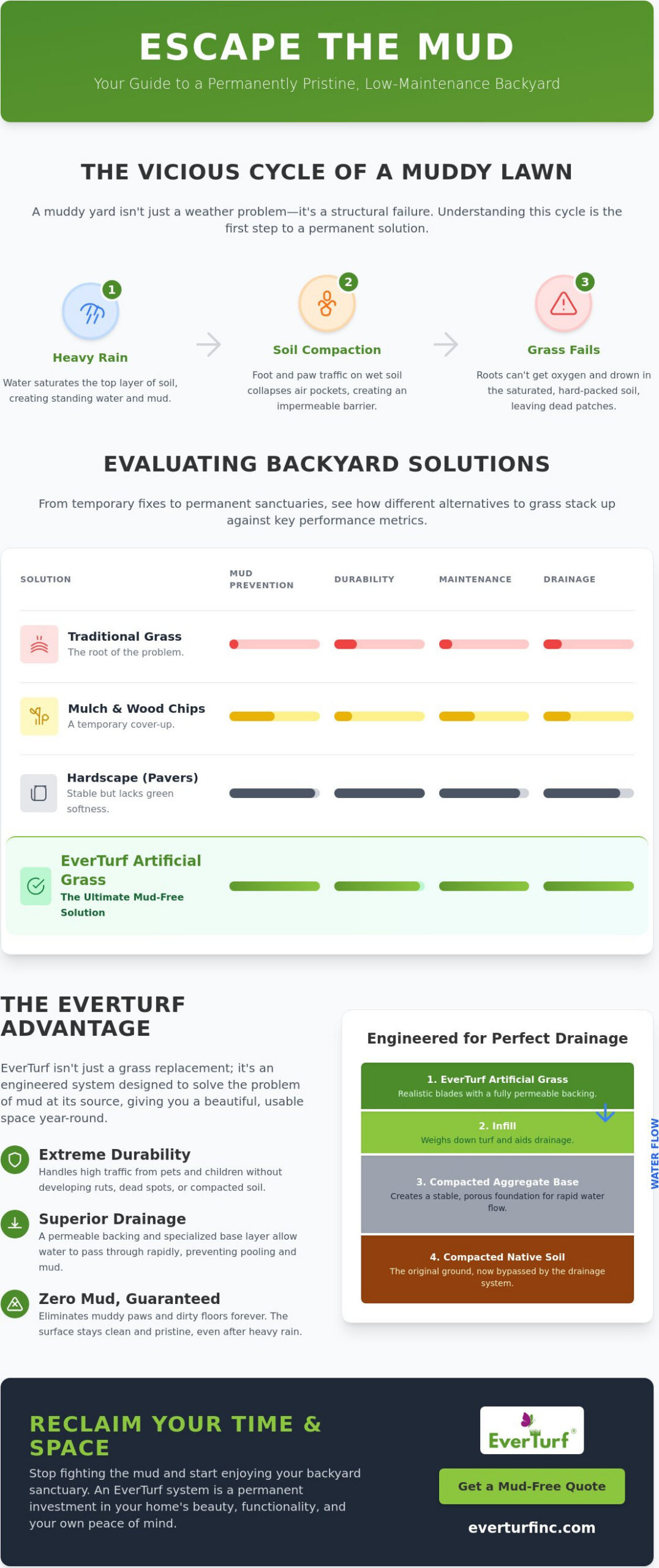
Most homeowners view a muddy yard as a temporary weather problem. In reality, it’s often a structural failure of the local ecosystem. When your backyard turns into a saturated bog, it’s not just an eyesore; it’s a disruption to your daily peace. You spend your mornings mopping muddy footprints instead of enjoying a quiet coffee on the patio. This emotional drain is the direct result of trying to force traditional sod to perform in conditions it simply wasn’t built to handle. Understanding why grass fails is the first step toward reclaiming your outdoor space.
The Problem with Soil Compaction
Soil is more than just dirt; it’s a delicate network of microscopic air pockets that allow water to move downward. Every time a dog runs or a child plays on wet grass, those pockets collapse. This compaction creates a literal barrier that prevents water infiltration. Once the ground is hard-packed, gravity can’t do its job. Hydrostatic pressure is the force exerted by standing water against the soil surface, which effectively seals off the ground and prevents downward drainage. Even the most expensive sod will eventually drown if the foundation beneath it is airless and impermeable.
The Maintenance Myth
Many people try to “fix” a swampy lawn by throwing more money at the same failing solutions. They buy bags of shade-tolerant seed or high-nitrogen fertilizers, hoping for a miracle. However, over-seeding in a chronically muddy zone is usually a wasted investment. The new sprouts are far too fragile to survive the next rainstorm. While some homeowners look toward Clover lawns as a more resilient natural option, even these can struggle when the underlying soil is severely compacted and lacks oxygen. Trying to save a dying lawn often leads to a cycle of hidden costs:
- Wasted spending on seed that never germinates in saturated soil.
- Chemical runoff that damages the local environment without helping the grass.
- The physical toll of hauling heavy bags of mulch or sod every spring.
Real change requires a shift in perspective. You aren’t just looking for a better type of grass; you’re looking for permanent alternatives to grass for muddy backyards that prioritize drainage and durability. Transitioning from “lawn care” to “landscape management” means choosing materials that work with your environment rather than against it. This holistic approach includes caring for the trees that anchor your property, and you can discover We Love Trees to ensure your arborist needs are met as part of your total yard transformation. By understanding the science behind the saturation, you can finally stop reacting to the mud and start designing a space that remains pristine, functional, and beautiful regardless of the forecast. You deserve a sanctuary that restores your personal time rather than consuming it.
Natural Alternatives to Grass: Ground Covers, Mulch, and Clover
When searching for alternatives to grass for muddy backyards, many homeowners instinctively reach for botanical solutions. There’s a romantic appeal to a lush, flowering ground cover or a rustic bed of cedar chips. However, in a yard that struggles with drainage, biological solutions face a steep uphill battle. While these options offer a softer aesthetic than concrete, they often succumb to the same “swamp effect” that killed your original turf. Understanding the limits of biology is essential before you invest another weekend into a garden center haul.
Ground Covers for Low-Traffic Zones
Low-growing perennials like creeping thyme and lilyturf provide a sophisticated, textured look for areas that receive minimal foot traffic. These plants excel in damp corners where traditional sod refuses to grow due to low light. But there’s a catch. Living solutions require significant time to establish, and during heavy rain seasons, they can easily be smothered by silt or uprooted by oversaturated soil. Managing expectations is key; while these plants are beautiful, they don’t provide the structural integrity needed for a truly usable backyard. If your goal is a space where children can play or dogs can roam, these delicate perennials will likely leave you back where you started.
Mulch and Wood Chips: A Tactical Stop-Gap
Wood chips and bark mulch are frequently used as a quick fix for mud. They provide immediate coverage and a clean, woody scent that temporarily masks the problem. Unfortunately, mulch is a “band-aid” rather than a cure. The biggest issue is the “Organic Decay” factor. Because mulch is a natural material, it eventually breaks down. This decomposition contributes to the soil’s organic matter, which, in a poorly drained yard, simply creates a deeper layer of mud over time. You may also find yourself dealing with secondary frustrations, such as:
- The risk of mold and fungi developing in chronically damp mulch beds.
- Small chips and splinters being tracked into your home by pets.
- The need for expensive annual replenishment as the material sinks into the muck.
Clover lawns have also seen a resurgence in 2026 because they require less water and naturally fertilize the soil. While eco-friendly, clover isn’t a structural solution for drainage. In high-traffic muddy areas, it quickly turns into a “green slurry” that offers little protection against the underlying muck. If you’re looking for a result that lasts longer than a single season, it’s worth exploring more permanent, engineered solutions like artificial turf installation. Transitioning to a professional system ensures that your yard remains a place of tranquility rather than a recurring project on your to-do list.
Hardscape Solutions: Pavers, Gravel, and Engineered Drainage
If biological solutions like mulch or ground covers have failed to tame your yard, it’s time to consider the structural power of hardscaping. Hardscape elements provide the most reliable alternatives to grass for muddy backyards because they replace unstable soil with engineered surfaces. By introducing gravel, river rock, or stone, you effectively “pave over” the drainage problem while creating a sophisticated, multi-functional landscape that withstands the elements. These materials don’t just hide the mud; they redefine how your property handles moisture.
Gravel and river rock are particularly effective when designed as dry creek beds. These features aren’t just decorative; they act as high-capacity channels that intercept surface runoff before it can pool. By layering varying sizes of stone over a professional-grade geotextile fabric, you ensure that water moves quickly through the system rather than sitting on top of the soil. This approach turns a muddy, unusable slope into a deliberate, modern-natural focal point that adds significant curb appeal.
The Utility of Permeable Pavers
For homeowners who want the elegance of a patio without the drainage headaches of solid concrete, EverTurf Pavers provide a superior pathway forward. Unlike traditional asphalt or poured concrete, these permeable systems feature specialized joints that allow rain to filter directly through the surface and return to the water table. This prevents the messy pooling and slippery surfaces associated with non-porous materials. You can even integrate small strips of greenery between stones to achieve a balanced, contemporary look that feels connected to nature but remains entirely mud-free.
Designing for Water Flow
Effective hardscaping is about more than just aesthetics; it’s about protecting your home’s foundation. By grading your yard and installing engineered drainage paths, you can direct water away from the house and toward appropriate runoff zones. It’s a logical investment that builds long-term property value and provides lasting peace of mind. However, it’s important to recognize the trade-offs. While a stone patio is perfect for a sophisticated dining area, it lacks the “give” required for a safe play zone. Solid concrete surfaces often trap and radiate solar energy, creating a stifling heat island effect, whereas permeable systems allow the ground to breathe and stay significantly cooler. This is why many visionary homeowners choose a hybrid approach, combining the strength of stone with the softness of high-performance turf to create a complete outdoor sanctuary.
The Ultimate Solution: Why Synthetic Turf Solves Mud Forever
While natural ground covers and hardscapes offer partial relief, they often require compromises in comfort or aesthetics. EverTurf Artificial grass represents the pinnacle of alternatives to grass for muddy backyards because it removes the source of the problem—exposed soil—entirely. By replacing unpredictable dirt with a precision-engineered multi-layer system, you achieve a lush, vibrant lawn that remains pristine regardless of the weather. This isn’t just a surface-level fix; it’s a permanent transformation of your property’s environment.
The secret lies in the sophisticated engineering beneath the surface. A high-performance synthetic lawn consists of a permeable crushed stone base, a durable backing, and the turf itself. Unlike traditional sod that holds onto moisture, this system utilizes rapid vertical drainage. It’s designed to process dozens of gallons of water per minute, allowing rain to pass through the turf and into the sub-base almost instantly. This eliminates the standing water and “green slurry” effects that plague even the most well-maintained natural lawns.
The EverTurf Difference: Quality and Durability
Choosing a premium artificial grass ensures your investment stands up to the rigors of daily life. High-quality fibers are engineered to resist UV degradation and maintain their structural integrity under heavy foot traffic. However, the product is only half of the equation. A professional artificial turf installation is essential to ensure the ground is properly graded and the base is perfectly compacted. This meticulous attention to detail creates a sensory experience that natural grass can’t match; a soft, inviting surface that stays dry and clean even after a week of heavy downpours.
The Essential Role of Infill
Infill is the unsung hero of a successful synthetic lawn. Utilizing the right EverTurf Infill is critical for keeping the grass blades upright and protecting the backing from damage. Beyond structural support, specialized infill solutions play a vital role in preventing odors in pet areas and ensuring the lawn feels natural underfoot. It provides the necessary weight to keep the turf secure and aids in the consistent flow of water through the drainage layers. By combining these advanced materials, you restore your personal time and move away from the cycle of mowing and mud. If you’re ready to reclaim your outdoor sanctuary, it’s time to schedule an artificial grass installation near me today.
Designing Your Mud-Free Oasis: Integrating Turf and Hardscape
The most successful outdoor transformations don’t rely on a single material. Instead, they utilize a hybrid approach that zones the yard based on how you actually live. By integrating diverse alternatives to grass for muddy backyards, you can create a space that is as functional as it is beautiful. Imagine a sophisticated layout where elegant pavers define your dining area, Green Plank composite decking creates a durable transition from the home, and lush EverTurf Artificial grass offers a soft, evergreen sanctuary for play, all supported by a high-capacity drainage border of decorative gravel. This multi-textured design doesn’t just solve the mud problem; it elevates your property into a true lifestyle extension.
When you move away from the “all-or-nothing” mentality of traditional sod, you gain the freedom to customize your environment. High-traffic zones near the back door benefit from the structural integrity of stone, while open areas remain inviting with the softness of synthetic turf. This strategic layering ensures that water is directed away from the home while providing a variety of sensory experiences. It’s a permanent shift from a high-maintenance struggle to a worry-free sanctuary that requires only minimal attention to stay pristine year-round, and you can discover LED Artistry to find the perfect lighting to showcase your new landscape well into the evening.
Pet-Specific Considerations
For many families, the primary driver for a mud-free yard is the health and cleanliness of their four-legged members. Choosing artificial grass for dogs is a transformative decision that ends the “muddy paw” cycle forever. Unlike natural grass, which develops unsightly yellow spots and thin patches from pet activity, specialized synthetic turf is engineered to withstand heavy use and facilitate rapid drainage. Maintaining a pristine pet sanctuary becomes effortless; a simple rinse with water is often all that’s needed to keep the surface fresh. These materials are non-toxic and safe for the whole family, providing a durable surface that stays green and clean regardless of how many laps your dog runs after a storm.
Your Next Steps to a Dry Backyard
Transitioning to a professional, mud-free landscape is an investment in your personal time and property value. The process begins with a thorough assessment of your current drainage issues to determine the best combination of materials for your specific climate. During a professional artificial turf installation, you can expect a meticulous preparation phase where the old, failing sod is removed and replaced with an engineered base. This foundation is the key to long-term satisfaction, ensuring your yard remains level and dry for decades—creating the perfect venue for hosting outdoor celebrations with Easy Cee Entertainment.
Consulting with a seasoned expert allows you to move beyond temporary fixes and envision a sophisticated, permanent solution. You can check out INEX Landscaping to see how professional design and drainage expertise can transform even the most difficult terrain. You don’t have to settle for a swampy backyard that limits your lifestyle. By choosing high-performance materials and expert planning, you’re reclaiming your weekends and creating an outdoor oasis that is always ready for a morning coffee or a sunset dinner. Take the first step toward a stress-free, evergreen outdoor space and rediscover the joy of a perfect yard.
Even as homeowners transition to lower-maintenance alternatives, professionals who manage traditional turf areas can learn more about Mowing Route Density to access high-quality equipment rentals and optimize their operations.
Reclaim Your Sanctuary and Your Time
You’ve discovered how soil compaction and poor drainage create a cycle of frustration that traditional sod simply cannot break. While mulch and gravel offer temporary relief or structural support, the most sophisticated alternatives to grass for muddy backyards involve engineered systems that prioritize both beauty and performance. By integrating permeable pavers with high-performance synthetic turf, you eliminate the “swamp effect” forever and restore the personal time you once lost to endless cleaning and maintenance chores. With the exterior secured, you can then focus on beautifying your home’s interior with high-quality options from Surefit Carpets Ltd.
With over 8 years of synthetic turf expertise and a focus on specialized pet-friendly, high-drainage solutions, we provide the national distribution of premium-grade materials needed for a lasting result. It’s time to stop fighting the muck and start enjoying a pristine, year-round outdoor space that enhances your lifestyle rather than consuming your weekends. Transform your muddy backyard with EverTurf Artificial Grass and finally experience the tranquility of an evergreen home. Your perfect, mud-free oasis is waiting.
Frequently Asked Questions
Can I install artificial turf directly over mud?
No, you should never install synthetic turf directly over existing mud or organic soil. A professional installation requires excavating the unstable dirt and replacing it with a multi-layered, compacted stone base. This engineered foundation ensures proper drainage and prevents the surface from shifting, wrinkling, or becoming uneven as the ground settles over time.
How much does it cost to replace a muddy lawn with synthetic turf?
The investment for a mud-free backyard depends on several variables, including the total square footage, the specific turf variety selected, and the complexity of the necessary drainage work. While the upfront cost is higher than traditional sod, homeowners find long-term value in the total elimination of watering, mowing, and fertilizing expenses. We recommend a personalized consultation to assess your property’s unique needs and provide an accurate project scope.
Is artificial grass safe for dogs and children in wet weather?
Yes, high-quality synthetic turf is exceptionally safe for the whole family, even during heavy rain seasons. Unlike natural grass that becomes slippery and treacherous when saturated, artificial fibers provide consistent traction and a stable surface. Specialized options like EverTurf Artificial grass pets are designed to remain clean and dry, preventing the growth of bacteria and ensuring a hygienic environment for play.
How does artificial turf drain compared to natural grass?
Artificial turf typically offers superior drainage compared to traditional lawns because it utilizes a precision-engineered vertical drainage system. While natural soil often becomes compacted and holds water on the surface, a synthetic system allows moisture to pass through the turf backing and into a permeable stone sub-base. This rapid infiltration prevents the pooling and runoff issues that turn standard yards into swamps.
Will a muddy backyard cause my artificial turf to sink?
A muddy backyard won’t cause your turf to sink if the installation includes a properly engineered base. The key is removing the unstable organic matter and replacing it with layers of crushed stone that are compacted to a high density. This stable foundation bridges the soft ground beneath, ensuring your lawn remains perfectly level and beautiful for decades regardless of the soil conditions below.
What is the best ground cover for a muddy area with heavy foot traffic?
For high-traffic zones, EverTurf Artificial turf is the most effective of all alternatives to grass for muddy backyards. While natural ground covers like clover or creeping thyme offer aesthetic appeal, they cannot withstand constant activity in saturated soil. Synthetic solutions provide a durable, non-organic surface that handles pets and play without ever turning into a “green slurry” or exposing the mud beneath.
How do I prevent my backyard from becoming muddy after every rain?
Preventing mud requires a permanent shift from organic soil to a highly permeable landscape design. You can achieve this by grading the yard to direct water away from low spots and replacing failing sod with engineered materials. Combining EverTurf Pavers for high-traffic paths and synthetic turf for larger areas creates a comprehensive system that remains dry and usable regardless of the weather forecast.
Can I mix pavers and artificial grass in a muddy yard?
Absolutely, mixing pavers and artificial grass is a sophisticated way to create a hybrid backyard that addresses both aesthetics and functionality. This design allows you to use pavers for stable dining and walking surfaces while utilizing synthetic turf for soft play zones. When both are installed over a shared permeable base, they work together to manage water flow and provide a diverse, mud-free outdoor oasis.