


Understanding Artificial Turf Pile Height: The Complete 2026 Guide
The thickest, longest blades of grass might actually be the fastest way to compromise your landscape’s long-term beauty. While it’s tempting to equate a taller pile height with premium quality, industry data from 2024 shows that nearly 70% of residential turf failures stem from choosing a height that doesn’t match the actual foot traffic of the space. You deserve a lawn that remains upright and evergreen, not one that flattens into a lackluster green carpet after just one season of backyard gatherings.
You likely want a sanctuary that looks indistinguishable from natural sod while offering the relief of a maintenance-free lifestyle. By understanding artificial turf pile height, you’ll transform from a confused shopper into a confident curator of your own outdoor environment. This guide will empower you to decode technical spec sheets and select a turf that withstands 95-degree heat and heavy rain while staying perfectly lush. We will explore the precise relationship between blade length, durability, and cost to ensure your investment delivers a lifetime of tranquil, worry-free weekends.
Key Takeaways
- Gain a professional edge by understanding artificial turf pile height and how specific blade lengths dictate both the aesthetic charm and functional performance of your space.
- Learn to navigate the trade-off between plush softness and long-term resilience by applying the “Leverage Principle” to prevent matting in high-traffic zones.
- Identify the ideal specifications for your unique lifestyle to ensure your new lawn remains a pristine, upright sanctuary rather than a flat disappointment.
- Discover why proper infill is the structural secret to maintaining fiber integrity and providing the necessary ballast to keep your turf standing tall.
- Master the nuances of climate-specific turf selection to achieve a vibrant, UV-stabilized landscape that allows you to finally reclaim your weekends.
What is Artificial Turf Pile Height? The Basics of Blade Length
Choosing the right synthetic grass involves more than just picking a shade of green; it requires understanding artificial turf pile height to ensure your investment matches your lifestyle goals. Pile height is the vertical length of synthetic fibers measured in inches. This measurement, taken from the primary backing to the very tip of the fiber, dictates how your lawn feels underfoot and how it presents itself to the neighborhood.
Since the early history and evolution of artificial turf, blade lengths have transitioned from flat, carpet-like surfaces to the sophisticated, multi-dimensional systems we install today. In 2026, standard industry ranges span from 0.5-inch professional-grade putting greens to 2.5-inch lush landscape designs. This height is the most visible factor in your turf’s “evergreen” personality, defining whether your space looks like a manicured golf course or a deep, meadow-like retreat. Selecting the correct length ensures your property maintains a pristine appearance that reflects your personal style.
Pile Height vs. Face Weight: The Dynamic Duo
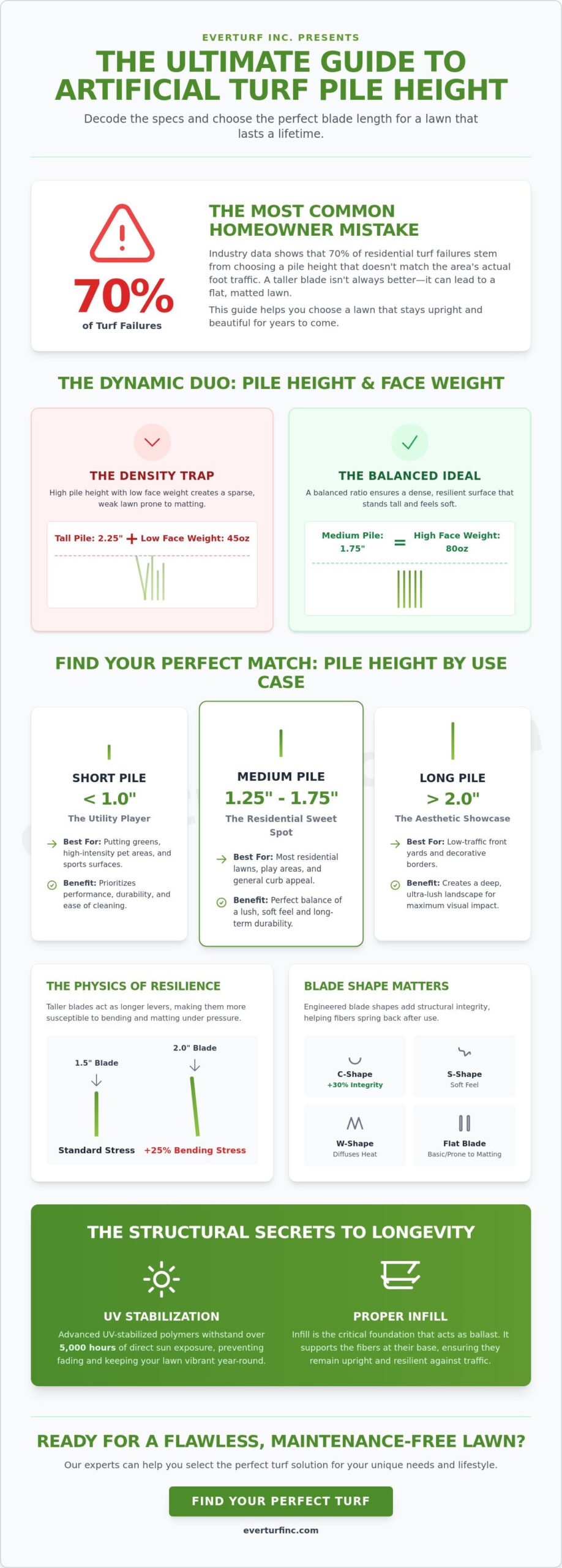
A common mistake is focusing solely on height while ignoring face weight. Face weight refers to the ounces of yarn per square yard. It is the critical metric that determines the density of your lawn. If you choose a tall 2.25-inch pile with a low face weight of 45 or 50 ounces, you fall into the “density trap.” The blades lack the structural support to stay upright, leading to a sparse, flat appearance that requires constant brushing. EverTurf recommends a balanced ratio for long-term satisfaction. For instance, a 1.75-inch pile paired with an 80-ounce face weight creates a vibrant, resilient surface that stands tall against foot traffic while maintaining a soft, premium feel.
Common Industry Standards in 2026
Selecting the right blade length depends on your specific vision for your property and how you plan to use the space. Modern 2026 standards categorize pile heights into three functional groups:
- Short Pile (Under 1″): These utility-focused surfaces prioritize performance and ease of cleaning. They are the primary choice for 0.5-inch to 0.75-inch putting greens and high-intensity pet relief areas where superior drainage is paramount.
- Medium Pile (1.25″ to 1.75″): This range is the “sweet spot” for residential curb appeal. These heights mimic the look of a healthy, well-maintained natural lawn, offering the perfect balance of softness and durability for families looking to reclaim their weekends.
- Long Pile (Over 2″): Reserved for high-end aesthetic projects, these fibers create a deep, lush landscape. They provide maximum visual impact for front yards or decorative borders with minimal traffic, offering a sophisticated look that stays vibrant year-round.
By understanding artificial turf pile height, you can transform a simple backyard into a permanent sanctuary that requires zero mowing and provides total peace of mind. Whether you desire a crisp, functional space or a thick, inviting meadow, the blade length is the foundation of your new outdoor lifestyle.
The Physics of Resilience: How Height Affects Matting and Durability
Reclaiming your weekends begins with a lawn that maintains its posture without constant brushing. When you’re understanding artificial turf pile height, you’re really studying the “Leverage Principle.” In simple terms, a taller blade acts as a longer lever. A 2-inch fiber experiences roughly 25% more bending stress at its base than a 1.5-inch fiber when subjected to the same foot traffic. This physics-based reality means that while taller grass looks lush, it requires more internal support to avoid matting.
Homeowners often face a trade-off between softness and resilience. A longer blade feels like a plush carpet underfoot, but it’s more prone to laying flat over time. To combat this, modern turf engineering utilizes specific blade geometries. For instance, C-shape fibers offer approximately 30% more structural integrity than flat blades, acting like a tiny architectural beam. W-shape and S-shape blades are designed to diffuse heat and pressure, ensuring the lawn bounces back after your dog’s afternoon sprint or a backyard gathering.
Durability also depends on the chemical composition of the turf. EverTurf utilizes UV-stabilized polymers designed to withstand over 5,000 hours of direct sun exposure. This prevents the fibers from becoming brittle and losing their verticality. For a technical deep dive, you can consult the industry definition of Pile Height to see how these measurements influence performance standards across the board.
Understanding “Crush Resistance”
High-traffic zones like walkways or pet runs thrive with shorter, stiffer fibers. These 1.25-inch to 1.5-inch heights provide superior crush resistance because the lower center of gravity prevents the blade from folding. Quality turf features “fiber memory,” a characteristic where the polymer returns to its original shape after compression. You can test this yourself. Press your thumb firmly into a turf sample for ten seconds; a high-resilience product should recover its upright position within moments. If you want to see this technology in action, explore our high-performance collections to find the perfect balance for your home.
The Aesthetic Impact of Taller Blades
Visual depth is the hallmark of a premium installation. Longer blades, typically ranging from 1.75 to 2.25 inches, create natural shadows that mimic the complexity of organic sod. These shadows break up light reflection, reducing the “sheen” factor that often plagues lower-quality synthetic products. By varying the blade angle and height, we create a vibrant, multi-tonal look that remains pristine through every season. This architectural approach to lawn design ensures your outdoor space looks evergreen and inviting, regardless of the heavy rainfall or intense heat common in the Florida climate.
Choosing the Right Pile Height for Your Specific Application
Selecting the ideal synthetic grass isn’t just about picking a shade of green that catches your eye. It’s a strategic decision that aligns your property’s aesthetic with your daily lifestyle. Many homeowners make the mistake of assuming a “one size fits all” approach, only to find their lawn looks flat and matted after just a few months of use. Understanding artificial turf pile height allows you to customize your environment for long-term performance and visual brilliance.
The best height for your yard is determined by the daily activity level of pets and children. A sprawling landscape designed for visual admiration requires a different technical specification than a high-traffic zone where the family gathers for weekend barbecues. By matching the fiber length to your specific needs, you ensure your investment remains lush and upright for years to come.
Residential Lawns and Curb Appeal
For front yards where curb appeal is the primary goal, a pile height between 1.5 and 1.75 inches is the gold standard. This range creates a pristine, freshly mowed appearance that mirrors the vibrant look of a healthy St. Augustine lawn. It offers enough length to look soft and inviting while maintaining enough structural integrity to stand tall against the elements.
When you transition to backyard turf, the focus often shifts toward a balance of comfort and durability. You want a surface that feels luxurious under bare feet but can still support the weight of heavy patio furniture or a seasonal fire pit. Medium-length fibers provide that sought-after cushion, helping you reclaim your weekends by providing a beautiful space that requires zero mowing or edging.
Pet-Friendly Areas and Dog Runs
If your outdoor space serves as a dedicated sanctuary for pets, a shorter pile height of 1 to 1.25 inches is significantly superior. Shorter fibers make waste removal effortless and allow for more effective deep cleaning. In Florida, where heavy rainfall and high humidity are constant, these shorter systems promote rapid drainage and superior airflow.
A denser, shorter turf prevents liquids from being trapped deep within the thatch. This design is critical for maintaining a fresh, odor-free environment. For specific maintenance strategies, you can explore our artificial grass for dogs guide to ensure your pet run remains a hygienic and evergreen retreat. Mastering the nuances of understanding artificial turf pile height ensures your yard remains a source of pride rather than a maintenance chore.
Backyard Putting Greens and Sports Fields
Performance-driven spaces require precision engineering rather than lush aesthetics. Professional-grade putting greens demand a short, tight pile between 0.5 and 0.75 inches. This ultra-short height is essential for achieving a true ball roll and consistent stimp speeds. Our EverTurf Putting Green Pro is specifically designed to provide tour-level performance right in your backyard.
For multi-purpose sports fields, the requirements shift toward safety and traction. These areas utilize specific pile heights that balance the need for shock absorption with the necessity of a stable surface for quick pivots and sprints. By choosing the correct height, you protect athletes from unnecessary trips while ensuring the fibers don’t interfere with the mechanics of the game.
The Structural Secret: How Infill Supports Your Turf Pile
Even the most premium synthetic grass can’t maintain its lush appearance in a vacuum. While understanding artificial turf pile height is the first step toward a beautiful lawn, the second is realizing those fibers require a physical foundation. Without proper infill, even a 2-inch pile won’t stand up to gravity and foot traffic for long. EverTurf Infill serves as the essential “ballast” that keeps every blade standing tall and proud. It anchors the entire system to the ground, which prevents the turf from shifting or wrinkling during heavy Florida rainstorms that can drop 3 inches of water in a single hour.
The relationship between your pile height and infill depth follows a strict 1/2 to 3/4 rule. To achieve the perfect balance of aesthetics and durability, you should fill your turf until only the top 1/4 to 1/2 inch of the blade is visible above the infill and thatch layer. For instance, a 1.75-inch pile height typically requires approximately 1.25 inches of infill material. This depth provides the necessary support for the “thatch” layer, those curly tan or green fibers at the base that mimic the look of natural dying grass and provide extra cushion for your feet.
Preventing the “Flat Lawn” Syndrome
Infill acts as a microscopic shock absorber for the base of your turf blades. If you skip this step, you expose the primary backing to direct UV sunlight and friction. In the 95-degree heat of a typical July afternoon, unprotected backing can become brittle, leading to premature wear and fiber loss. By using high-quality turf infill, you create a protective barrier that keeps your lawn looking pristine for its entire 15-year lifespan. It ensures your investment stays a vibrant sanctuary rather than a matted green carpet.
Maintenance Tips for Taller Piles
Taller pile heights offer a more luxurious feel, but they require a proactive grooming schedule to stay upright. We recommend a “Power Broom” treatment every 6 months for high-traffic zones like walkways or pet areas. This specialized tool uses rotating bristles to lift flattened fibers and redistribute infill that may have shifted. Seasonal grooming is your best defense against the “lay-flat” effect common in 2-inch or taller products. A quick 20-minute session with a stiff-bristled synthetic turf rake will revitalize your evergreen space and keep it looking professional and inviting. When understanding artificial turf pile height, remember that more height means more surface area to brush, but the visual reward of a deep, plush lawn is well worth the minor effort.
Finding Your Perfect EverTurf Solution
EverTurf Inc. engineers synthetic grass solutions that transcend mere aesthetics. We recognize that a homeowner in Phoenix faces different environmental stressors than one in Seattle or Miami. Our product lineup features specific pile heights calibrated for diverse US climates, ensuring your lawn stays resilient against 100-degree heat or heavy seasonal rainfall. Every fiber is UV-stabilized and crafted from high-performance polymers designed for extreme longevity. This technical precision means your investment won’t fade or flatten prematurely. Understanding artificial turf pile height is the first step toward a permanent outdoor upgrade that looks as lush in year ten as it does on day one.
Choosing the right height is about more than just visual appeal; it’s about reclaiming your time. Traditional sod requires approximately 150 hours of maintenance annually. By selecting an EverTurf solution with the optimal pile height for your specific foot traffic patterns, you eliminate the need for mowing, fertilizing, and constant weeding. You’re not just buying turf. You’re buying back your Saturdays. We position ourselves as your Reliable Visionary, guiding you away from the frustrations of natural grass toward the tranquility of a perfect, year-round outdoor space.
- Climate-Engineered: Products designed to withstand specific regional weather patterns.
- UV-Stabilized: Advanced protection that prevents color degradation and fiber brittleness.
- High-Performance: Materials that maintain their “memory” and upright structure over time.
- Low Maintenance: Significant reduction in lifetime labor and water costs.
Expert Consultation and Samples
Selecting a lawn from a digital screen is nearly impossible. Lighting conditions at 2:00 PM in your backyard will make a 1.75-inch pile look entirely different than it does in a warehouse. We provide physical samples so you can feel the density and see the realistic thatch layers in your unique environment. Our consultants help you master understanding artificial turf pile height by calculating the long-term ROI of your investment. We compare the upfront price against a decade of saved water bills and landscaping fees. For a detailed breakdown of the financial side, explore our artificial turf installation cost guide to help plan your 2026 budget.
Ready to Transform Your Space?
Your journey toward a pristine, evergreen landscape starts with a professional conversation. As leaders in the industry, we provide a sophisticated roadmap for your property’s transformation. We don’t just supply turf; we deliver a permanent lifestyle enhancement that increases property value and personal peace. Whether you need national supply services or a custom local quote, our team is ready to assist. Reach out today to secure your professional consultation and experience the EverTurf promise of quality, durability, and a stress-free lawn that stays vibrant forever.
Step Into Your Forever Green Future
Your journey to a vibrant, maintenance-free lawn starts with choosing the right foundation. Mastering the art of understanding artificial turf pile height ensures your investment remains pristine for years, whether you’re installing a high-traffic pet run or a professional-grade putting green. By selecting the optimal blade length and pairing it with proper infill, you protect your turf from matting and extend its functional lifespan beyond the typical 15 year benchmark.
EverTurf provides specialized solutions through national distribution for both residential and commercial projects. Our exclusive EverTurf UV-stabilized fiber technology prevents fading even under the harshest 2026 climate conditions. From the precision of our Putting Green Pro series to our antimicrobial pet-friendly systems, we offer the technical expertise to transform your property into a stress-free sanctuary. It’s time to reclaim your weekends and enjoy an evergreen landscape that never demands a mower.
Explore the EverTurf collection and find your perfect pile height today. You deserve a lawn that stays as beautiful as the day it was installed.
Frequently Asked Questions
What is the most realistic pile height for a residential lawn?
A pile height between 1.25 and 1.75 inches provides the most realistic aesthetic for a Florida home. This specific range strikes a perfect balance between a lush, freshly mown look and structural integrity. Understanding artificial turf pile height is essential because anything over 2 inches may look overgrown; meanwhile, shorter options often appear more like a putting green than a traditional backyard sanctuary.
Does a taller pile height make artificial grass more expensive?
Taller pile heights typically require a higher face weight, which increases the total material cost. Since a 2 inch blade uses more synthetic fiber per square foot than a 1 inch blade, the manufacturing resources are greater. You’re investing in a more dense, vibrant surface that offers a premium feel underfoot while maintaining its evergreen beauty for 15 to 20 years.
Can I use a vacuum on long-pile artificial turf?
You should avoid using a standard household vacuum on long-pile turf because the suction can displace your infill and the beater bar may fray the fibers. Instead, use a leaf blower or a specialized power broom to clear debris. These tools maintain the pristine look of your lawn without risking the structural damage that 1,200 watt vacuum motors often cause to synthetic systems.
How does pile height affect the temperature of the turf?
Taller pile heights can retain more heat because the increased surface area of the blades absorbs more UV radiation during Florida’s 230+ sunny days per year. While the difference is often less than 10 degrees compared to shorter turf, choosing a UV-stabilized product is vital. Using cooling infills can further reduce surface temperatures by 30 to 50 degrees through the process of evaporative cooling.
What happens if I don’t use enough infill with a tall pile height?
Insufficient infill in a tall pile system leads to premature matting and permanent fiber deformation. Infill acts as the ballast that keeps blades standing upright; without it, a 1.75 inch blade will flatten under its own weight within 6 months of installation. Proper installation requires roughly 1.5 to 2 pounds of infill per square foot to ensure your outdoor space remains resilient and upright.
Is a short pile height better for homes with large dogs?
A shorter pile height of 1 inch to 1.25 inches is the superior choice for homes with large dogs. This height allows for easier waste removal and more efficient rinsing of the antimicrobial backing. Understanding artificial turf pile height helps pet owners realize that shorter fibers prevent trapped odors and withstand the heavy foot traffic of a 70 pound Labrador more effectively than longer, decorative blades.
How often should I brush my turf to keep the pile standing up?
You should brush your turf with a synthetic bristle broom every 3 to 4 months to prevent fibers from leaning. High-traffic zones, such as paths to the pool or play areas, might require a quick refresh every 30 days. This simple maintenance task takes less than 20 minutes for a standard 500 square foot lawn and ensures your investment stays vibrant and upright year-round.
Does pile height impact the drainage of the synthetic grass system?
Pile height does not significantly impact the drainage rate of your synthetic grass system. Drainage is primarily determined by the perforated backing and the 3 to 4 inch crushed stone base layer underneath. Most high-quality systems are engineered to handle over 30 inches of rain per hour, ensuring your lawn stays puddle-free even during the intense tropical downpours common in the Florida climate.