
How to Choose the Right Artificial Grass: The 2026 Buyer’s Guide
What if your Saturday morning ritual didn’t involve the loud drone of a lawnmower or the struggle to revive a patchy, sun-scorched lawn? You likely want a yard that remains pristine year-round, yet you might hesitate because of the plastic sheen often associated with low-quality turf. Learning how to choose the right artificial grass is the difference between a landscape that looks like a high-end resort and one that feels like a cheap imitation. You’ve worked hard for your home; your outdoor space should reflect that same level of care and sophistication.
This 2026 buyer’s guide provides the technical clarity and lifestyle insights you need to select a synthetic lawn that stays lush and drains up to 30 inches of water per hour. We’ll demystify pile heights and antimicrobial backings so you can enjoy a safe, odor-free environment for your pets and children. By the end of this article, you’ll understand how to secure an evergreen sanctuary that eliminates roughly 70% of your outdoor water usage and lasts for over 20 years. We’ll walk through the essential factors of fiber shape, UV-stabilization, and professional installation to help you reclaim your weekends and elevate your property’s value.
Key Takeaways
- Identify your space’s primary function to match yarn resilience with expected foot traffic, ensuring your lawn stays lush and mat-free for decades.
- Master how to choose the right artificial grass by evaluating face weight and pile height to achieve a professional, freshly mowed aesthetic that lasts.
- Discover specialized antimicrobial and high-flow drainage solutions designed to keep pet areas and landscapes vibrant, clean, and odor-free.
- Learn why the “invisible” foundation of backing and infill is critical for preventing structural ripples and maintaining a perfectly smooth, durable surface.
- Calculate your long-term “Weekend ROI” to see how a premium synthetic lawn pays for itself by reclaiming your time and eliminating maintenance stress.
Defining Your Turf Priorities: Purpose Before Aesthetics
Imagine a weekend where the mower stays in the shed and your lawn remains a pristine, evergreen sanctuary despite the intense Florida heat. Achieving this vision starts with a strategic decision. To understand how to choose the right artificial grass, you must first look past the surface beauty and define the primary function of your outdoor space. Whether you’re designing a tranquil ornamental border, a high-energy pet run, or a backyard putting green, your choice dictates the longevity of your investment. Since the early history and development of artificial turf, the industry has evolved from basic plastic carpets to sophisticated systems engineered for specific high-performance environments.
Environmental factors also play a critical role in your selection process. Florida’s rainfall patterns require a drainage capacity of at least 30 inches per hour to prevent pooling and potential mold growth. You’ll also need to evaluate sun exposure; areas with constant direct sunlight benefit from cooling technologies that reduce surface temperatures by up to 15 percent compared to standard synthetic fibers. Identifying these logistical needs early ensures your everlasting green space remains functional and comfortable year-round. This clarity is the first step in learning how to choose the right artificial grass for a stress-free lifestyle.
Assessing Traffic Levels and Durability
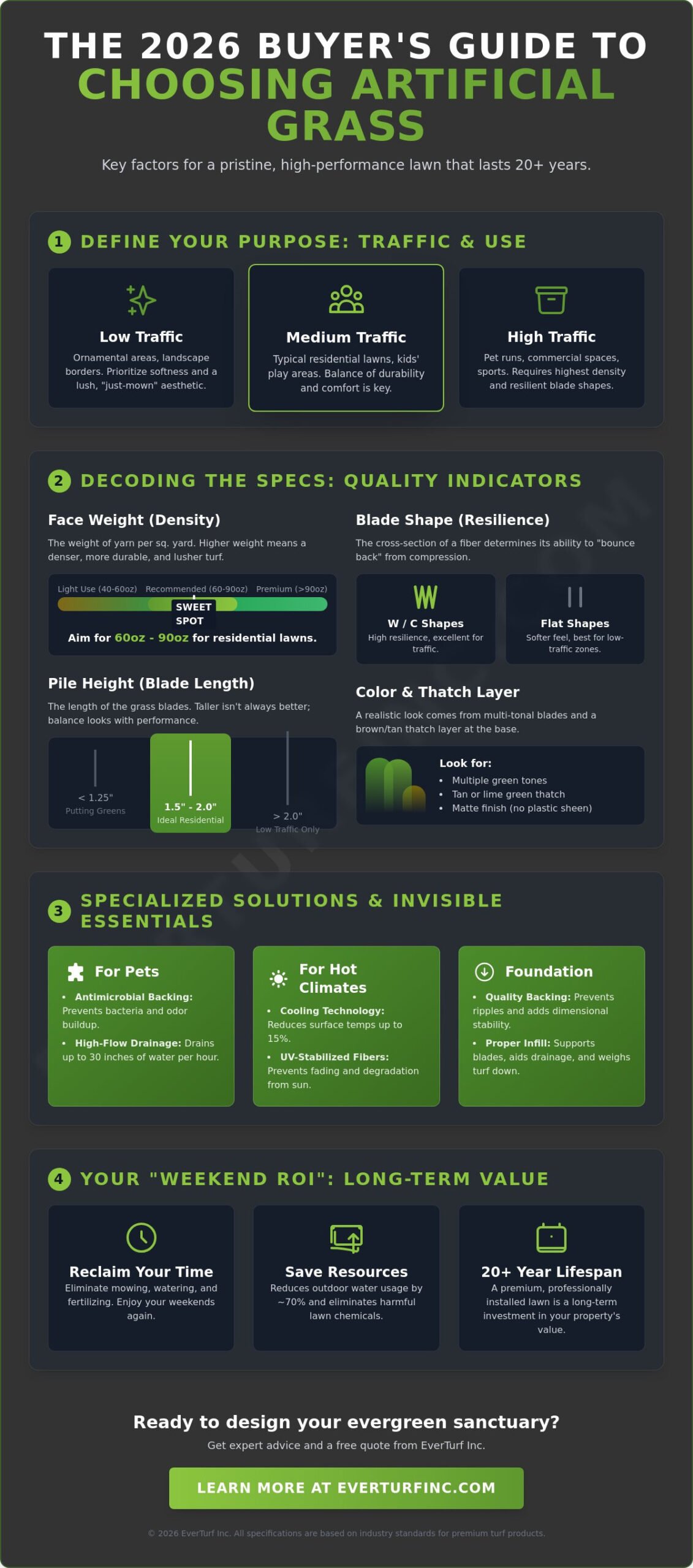
Durability isn’t a one-size-fits-all metric. Low-traffic zones allow for longer, softer blades that prioritize a “just-mown” look. Conversely, high-traffic zones for active families or pets require a higher stitch rate and specialized blade shapes. W-shaped and C-shaped blades provide structural memory, ensuring the grass “bounces back” after foot compression. For active backyards, selecting a product with a density of 60 to 80 ounces per square yard prevents premature matting and extends the lawn’s life to 20 years.
Aesthetic Preferences: Color and Texture
The most realistic synthetic lawns utilize a multi-tonal palette rather than a single shade of green. High-quality turf includes a “thatch” layer; this consists of shorter, curled fibers in tan or lime green that mimic natural organic matter. Modern 2026 manufacturing uses matte-finish UV-stabilizers to eliminate “plastic” glare. You’ll want to select a hue that complements your local flora, such as vibrant olive tones for sun-drenched Florida landscapes. This attention to detail allows you to finally reclaim your weekends.
Decoding the Technical Specs: Face Weight, Pile Height, and Density
Understanding the technical details is the first step when you learn how to choose the right artificial grass for your specific lifestyle. These specifications aren’t just numbers on a sample tag; they determine how your lawn feels underfoot and how it responds to years of foot traffic. Premium turf is a 15 year investment, and the “engine” under the hood matters just as much as the vibrant green color.
Understanding Face Weight and Density
Face weight refers to the weight of the yarn per square yard, excluding the weight of the backing. It’s the most reliable indicator of material quality and longevity. For a lush residential lawn that feels substantial, a face weight between 60oz and 90oz is the industry standard. High density prevents your infill from migrating and keeps the fibers from flattening into a matted mess. Following the Synthetic Turf Council guidelines ensures you select a product built for both performance and safety. A high stitch rate creates a fuller surface that mimics the complexity of natural sod. When you have more blades per square inch, the turf can better support its own weight, keeping your yard looking pristine even after a weekend of hosting guests.
Pile Height: Finding the Sweet Spot
The ideal height for standard backyard turf typically falls between 1.5 and 2 inches. This range captures that perfect, freshly mowed aesthetic that homeowners crave. While ultra-tall “lush” grass might look appealing in a showroom, it often presents trade-offs in heavy-use zones. Taller fibers have a greater tendency to tip over if they aren’t supported by heavy infill or frequent brushing. If you’re designing a space for high-traffic paths or athletic activities, shorter pile heights are preferred. They offer less resistance, higher durability, and are much easier to clean. Choosing the right height ensures your lawn remains a stress-free sanctuary rather than a maintenance chore.
The type of polymer used also dictates the softness and longevity of your lawn. Polyethylene (PE) is the gold standard for residential use. It’s incredibly soft, UV-stabilized, and stays vibrant even in 95-degree heat. Polypropylene (PP) is often stiffer and works well for putting greens or as a supportive thatch layer. When you’re deciding how to choose the right artificial grass, prioritize Polyethylene for areas where kids and pets will be playing. It provides a skin-friendly surface that remains supple for over a decade. If you’re ready to see how these technical specs translate into a beautiful, permanent outdoor space, you can browse our evergreen collections to find your perfect match.
Specialized Solutions: Matching Turf to Your Lifestyle
Selecting the perfect surface requires more than just picking a shade of green. You need to align technical specifications with how you actually live. Learning how to choose the right artificial grass means evaluating the unique demands of your household, whether you’re managing high-energy pets or perfecting your short game. EverTurf provides a permanent solution that transforms these specific needs into a maintenance-free reality.
The Gold Standard for Pet Owners
Pet owners face unique challenges regarding hygiene and odor control. Superior drainage is the most critical factor here. EverTurf solutions prioritize a high-flow drainage system capable of processing over 40 inches of liquid per hour. This rapid transition prevents urine from pooling and creating unpleasant smells. We integrate antimicrobial agents directly into the turf blades during the manufacturing process. This isn’t a topical spray; it’s a permanent feature that inhibits the growth of bacteria and mold. For a deeper look at creating a pristine sanctuary for your furry friends, explore our guide on artificial grass for dogs.
High-Performance Putting Greens
Serious golfers require professional-grade feedback from their backyard installations. When you analyze EverTurf Putting Green options, stimp speeds become the primary metric. Our pro-level surfaces achieve stimp ratings between 9 and 12, mimicking the fast, consistent conditions of a championship course. We utilize specialized cross-stitched fibers to ensure the ball rolls true from every angle without “tracking” or grain interference. The fringe grass selection is equally vital. A dense, high-pile fringe allows you to practice realistic chip shots while providing the structural support necessary to keep the green’s edges crisp and stable over time.
Safety and Urban Versatility
Safety takes priority for families with active children. Professional playground turf must meet specific ASTM F1292 standards for fall height ratings. This often requires a dedicated shock-absorbing foam underlayment to protect against impacts from heights of 5 to 10 feet. It’s a level of security that traditional sod simply cannot provide during a dry Florida summer.
For those in urban environments, EverTurf Roof & Deck solutions transform sterile concrete balconies into vibrant retreats. These systems utilize a specialized drainage mat design. This ensures water flows freely to existing building drains, preventing moisture from becoming trapped against the structure. Whether you’re upgrading a high-rise terrace or a suburban patio, understanding these technical requirements is the final step in how to choose the right artificial grass for your specific environment. You aren’t just buying turf; you’re reclaiming your weekends and investing in a lifestyle of ease.
- Pet Systems: Look for 100% permeable backing and antimicrobial blade technology.
- Golf Greens: Prioritize cross-stitched fibers for multi-directional putting accuracy.
- Playgrounds: Verify fall height certifications and use non-toxic, heat-reducing infills.
- Rooftops: Ensure the system includes a drainage layer to protect the underlying building membrane.
The Invisible Essentials: Backing, Drainage, and Infill
While the lush green surface captures your eye, the components beneath the blades determine how long your investment actually lasts. These hidden layers act as the foundation for your lawn, ensuring it remains flat, functional, and beautiful for decades. Understanding these technical elements is a vital step in learning how to choose the right artificial grass for a permanent, worry-free landscape.
Backing Technology and Drainage
The backing is the structural backbone of your turf. A high-quality system relies on a dual-layer approach. The primary backing layer secures the fibers in place, while the secondary layer, typically composed of high-grade polyurethane, provides the dimensional stability needed to prevent ripples, expansions, or tears during temperature shifts. In Florida, where a single afternoon storm can drop 3 inches of rain in an hour, your drainage system must be a top priority.
Standard turf systems should handle at least 30 inches of rain per hour to prevent pooling and mold growth. You generally have two choices for drainage: perforated and flow-through. Perforated backings feature small holes punched every few inches, while flow-through (or 100% permeable) backings allow water to pass through every square inch of the material. Choosing a high-performance backing is essential for artificial grass longevity, ensuring your lawn stays pristine and odor-free even after a tropical downpour.
Why EverTurf Infill is Non-Negotiable
Think of turf infill as the “soil” of your synthetic lawn. Without this heavy material brushed into the fibers, the blades will flatten under foot traffic and the backing remains exposed to damaging UV rays. Proper infill keeps the blades upright, mimicking the resilience of natural grass while protecting the turf’s structural integrity. It also provides the necessary weight to keep the turf from shifting.
- Silica Sand: This is a standard, cost-effective choice that provides excellent weight and stability for low-traffic areas.
- Coated Sand: These options often feature antimicrobial properties, making them the gold standard for pet owners who want to prevent odors.
- Cooling Infill: Advanced materials can reduce surface temperatures by up to 30 degrees during peak summer heat, keeping your oasis comfortable for bare feet.
For installations on hard surfaces like concrete patios or pool decks, integrated paver solutions take drainage a step further. These systems use specialized drainage cells or grids beneath the turf to create a “lift,” allowing water to flow freely to existing drains rather than sitting beneath the backing. This ensures your outdoor living space remains dry and inviting, regardless of the weather. Reclaim your leisure time and stop worrying about puddles or flat grass.
Ready to build a foundation that lasts? Connect with an EverTurf specialist today to explore our high-performance drainage and infill options.
Making the Investment: Quality, ROI, and Reclaiming Your Time
Deciding how to choose the right artificial grass involves looking far beyond the initial price tag to see the decade of value ahead. While a bargain-basement turf might save money on day one, these products often degrade within 36 months under the intense Florida sun. High-quality synthetic turf acts as a permanent asset for your property. It eliminates the 150 hours the average homeowner spends on lawn care annually, according to national landscaping data. This “Weekend ROI” is the true measure of your investment, giving you back thousands of hours over the lifespan of the product.
Beyond the gift of time, the environmental impact provides a significant return. Switching to synthetic grass reduces household water consumption by up to 70%, based on figures from the Environmental Protection Agency. You also eliminate the need for chemical fertilizers and toxic pesticides that often runoff into local waterways. Choosing a reputable partner means looking for a team that understands these ecological benefits and provides transparent drainage specifications to handle the 50 plus inches of rain our region receives annually.
The Real Cost of Artificial Turf
Understanding the artificial turf installation cost requires a balance between material quality and professional labor. Premium products feature advanced UV-stabilization and antimicrobial backings that prevent the fading or odors associated with cheaper alternatives. A 15-year warranty isn’t just a piece of paper; it’s a guarantee of durability that protects your home’s curb appeal. Professional installation ensures the base layer is compacted correctly, which prevents the shifting and buckling that ruins a DIY project within the first two years.
- UV-Stabilization: Prevents blade brittleness in high-heat environments.
- Superior Drainage: Ensures your lawn is dry and usable minutes after a heavy downpour.
- Warranty Length: Look for 10 to 15-year coverage to ensure long-term peace of mind.
The EverTurf Vision: A Maintenance-Free Lifestyle
We see your outdoor space as a sanctuary, not a chore list. Transitioning to an EverTurf lawn provides an evergreen view that remains pristine regardless of heat waves or tropical storms. It’s about the psychological relief of looking out your window at a lush, vibrant landscape and knowing your Saturday is entirely yours. This is more than a simple renovation. It’s a permanent upgrade to your quality of life that replaces the roar of the mower with the tranquility of a perfect lawn. When you’re ready to learn how to choose the right artificial grass for your specific needs, we’re here to guide you through every technical and aesthetic detail.
Transform your landscape today. Contact us for a custom consultation and start your journey toward an everlasting green space.
Step Into Your Ever-Green Future
Transforming your outdoor space begins with a clear vision of your lifestyle needs. By focusing on technical specifications like face weight and density, you ensure your new lawn handles daily foot traffic while maintaining its lush, pristine appearance. Learning how to choose the right artificial grass is the vital first step toward a worry-free property that stays vibrant through 2026 and beyond. EverTurf products feature UV-stabilized fibers to prevent fading and specialized antimicrobial pet-friendly options to keep your environment fresh and safe. Our national distribution of the professional-grade Putting Green Pro ensures that elite performance is accessible for your own backyard. When you prioritize high-quality backing and superior drainage, you’re not just buying turf; you’re securing a permanent solution. It’s time to stop the endless cycle of mowing and watering. You’ve done the research; now let’s make your vision a reality. Reclaim your weekends and transform your lawn with EverTurf Inc. Your perfect, evergreen sanctuary is waiting for you.
Frequently Asked Questions
How do I know if the artificial grass I am looking at is high quality?
You can identify high-quality turf by examining the backing and the face weight of the product. Look for a three-layer polyurethane backing that resists expansion and contraction during temperature shifts. A premium turf typically features a face weight between 70 and 90 ounces per square yard to ensure a dense, lush feel. Check the yarn shape as well; “W” or “C” shaped fibers offer 40 percent better resilience against flattening compared to standard flat blades.
Does artificial grass get too hot for pets or children in the summer?
Modern synthetic turf stays comfortable even during peak summers by utilizing specialized cooling infills and heat-reflective pigments. These technologies can lower surface temperatures by 15 to 20 degrees compared to standard turf options. To keep the area pristine, a quick two-minute rinse with a hose provides immediate evaporative cooling for your kids and pets. Choosing a lighter green shade also helps reflect more solar energy than darker forest tones, keeping the space inviting year-round.
Can I install artificial grass myself or should I hire a professional?
Professional installation is recommended for any project over 200 square feet to ensure proper drainage and seam invisibility. A certified team excavates 4 inches of soil and replaces it with a compacted crushed stone base to prevent future sinking or shifting. Learning how to choose the right artificial grass involves understanding that the longevity of your investment depends 90 percent on the ground preparation. Experts use industrial power brooms to ensure every fiber stands upright and uniform.
What is the best pile height for a residential backyard with kids?
A pile height ranging from 1.25 to 1.75 inches provides the perfect balance of softness and durability for active families. This specific length offers enough cushion to protect against falls while remaining upright under heavy foot traffic from soccer games or tag. Shorter piles are easier to clean and resist matting over time. Selecting this mid-range height ensures your lawn maintains its vibrant, manicured aesthetic without the shaggy look of longer, two-inch landscape grasses.
How long does a high-quality synthetic lawn typically last?
A premium synthetic lawn typically lasts between 15 and 20 years when maintained correctly. EverTurf designs products with 100 percent lead-free fibers and high-density backings that withstand decades of wear and tear. Because our materials are UV-stabilized, the grass retains its evergreen color for the duration of its lifespan. This long-term durability allows you to reclaim your weekends for a generation, moving away from the constant cycle of seeding, weeding, and mowing.
Will artificial grass help with drainage issues in my yard?
High-quality artificial turf improves drainage by allowing up to 30 inches of water to pass through the backing per hour. This rate far exceeds the 2 to 4 inches of rain seen during heavy tropical storms, preventing puddles and mud from forming. The system relies on a porous backing and a four-inch deep permeable stone base to channel water away from your home’s foundation. It’s a permanent solution for low-lying areas that struggle with stagnant water after summer downpours.
Is artificial turf safe for the environment and my family?
Yes, modern synthetic turf is exceptionally safe because it eliminates the need for toxic pesticides, fertilizers, and herbicides. Our antimicrobial fibers prevent the growth of bacteria and mold, creating a sterile environment for children to play. From an environmental perspective, each square foot of synthetic grass saves approximately 55 gallons of water every year according to regional water management data. Understanding how to choose the right artificial grass means prioritizing non-toxic, lead-free materials that protect your family.
How much maintenance does artificial grass actually require?
Artificial grass requires very little maintenance, typically involving a monthly rinse and a quarterly brushing to keep fibers upright. You’ll spend about 10 percent of the time on upkeep compared to the 150 hours a year required for a natural lawn. Simply use a leaf blower to remove organic debris like fallen leaves or twigs. This minimal effort ensures your outdoor space remains pristine and ready for entertaining every day of the year without the stress of traditional yard work.