

DIY Turf Installation vs. Professional Cost: A 2026 Homeowner’s Value Guide
That $2,500 savings you anticipate by handling your own landscaping could actually evaporate before your first summer barbecue. While the initial DIY turf installation vs professional cost comparison often favors the weekend warrior, industry data from 2025 shows that 30 percent of self-installed synthetic lawns require significant drainage remediation within the first three years. You want to stop spending your Saturdays behind a mower and start enjoying a lush, evergreen sanctuary that withstands the intense Florida heat and sudden tropical downpours.
It’s natural to feel some anxiety when you see a professional labor quote, especially when you’re already dreaming of a pristine, maintenance-free yard. This guide will help you discover the hidden expenses of DIY projects, from specialized tool rentals to sub-base stabilization, versus the 20-year ROI of a precision-engineered installation. You’ll learn exactly how to evaluate your property’s needs to ensure your investment results in a vibrant outdoor space rather than a costly rework project.
Key Takeaways
- Understand why the initial price per square foot is only the starting point for a true budget in the 2026 synthetic grass market.
- Uncover the hidden expenses of high-performance materials and labor hours to accurately evaluate DIY turf installation vs professional cost.
- Learn how professional engineering prevents common pitfalls like poor drainage and visible seams to ensure a pristine, evergreen sanctuary.
- Identify the specific property conditions, such as complex slopes or drainage needs, that require a professional touch to protect your investment.
- Discover how to reclaim your weekends and maximize long-term ROI by avoiding the physical toll and potential “cost of failure” of a DIY project.
The Financial Landscape of Synthetic Turf: DIY vs. Professional Costs in 2026
Your lawn is more than just a patch of green; it’s a 20-year asset that defines the curb appeal and functionality of your property. In 2026, the decision to upgrade isn’t just about aesthetics. It’s a strategic financial move. When evaluating the DIY turf installation vs professional cost, you must look beyond the surface. A high-performance lawn requires a foundation as solid as your home’s own. The baseline cost expectations for premium synthetic grass have shifted as technology has advanced. Understanding the history and development of artificial turf shows how we’ve moved from basic plastic carpets to sophisticated, eco-friendly systems that mimic the cooling properties of natural soil.
Viewing your lawn as a long-term investment changes the math. A cheap installation might last five years, but a visionary approach ensures your space remains lush and vibrant for two decades. The primary cost drivers fall into three distinct categories:
- Materials: The quality of the yarn, backing, and infill.
- Site Preparation: Excavation, grading, and the installation of a superior drainage base.
- Specialized Labor: The technical skill required for invisible seams and secure edging.
Average Price Points: A National Overview
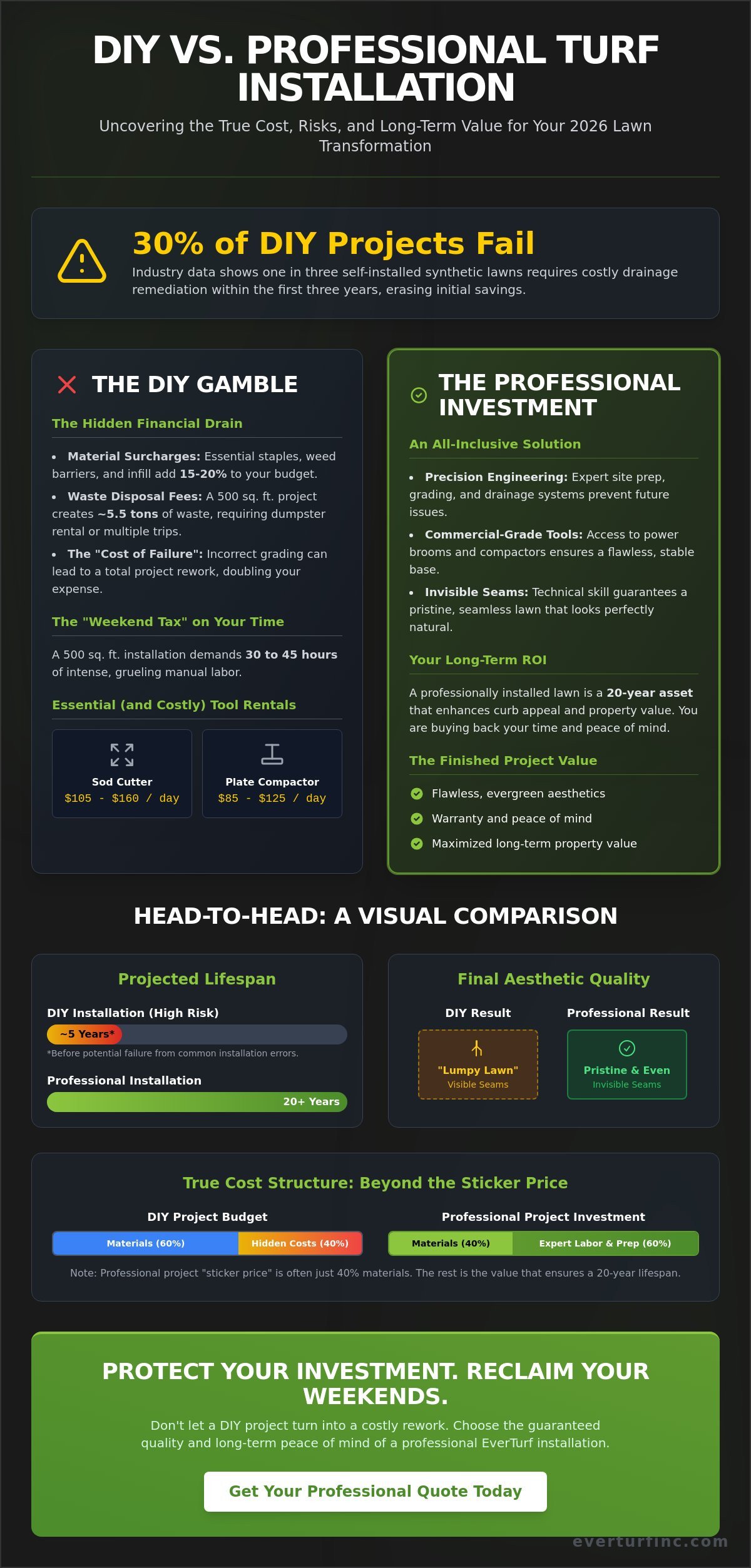
Premium materials like EverTurf Artificial grass currently command a range of $5 to $12 per square foot. This price reflects the cost of antimicrobial coatings and UV-stabilized fibers that won’t fade under the harsh sun. If you choose the professional route, expect a labor premium between $6 and $15 per square foot. This isn’t just for the physical work. It covers the use of commercial-grade plate compactors and power brooms that a typical DIYer doesn’t own. The “sticker price” of the turf itself often represents less than 40% of a professionally finished project’s total cost.
Why 2026 is the Year to Transition
The financial pressure of maintaining a traditional lawn has reached a breaking point. Water rates in many municipalities have surged by 25% since 2021. When you add the rising cost of synthetic fertilizers and gasoline, the natural lawn becomes a monthly burden. By choosing to transition now, you’re reclaiming your weekends from the very first month. You aren’t just buying grass; you’re buying back your time. Our Florida-specific expertise ensures that your EverGreen sanctuary stands up to heavy rainfall and tropical heat, making the DIY turf installation vs professional cost debate a matter of how much you value your peace of mind.
The True Cost of DIY: Beyond the Price of Synthetic Grass
Choosing a DIY path often begins with a desire to save, yet the financial reality of DIY turf installation vs professional cost extends far beyond the price per square foot of the grass itself. To achieve an everlasting, pristine aesthetic, you must account for the secondary materials that ensure longevity. High-strength EverTurf Staples, professional-grade weed barriers, and antimicrobial EverTurf Infill are essential for a finish that remains vibrant. For a standard 500-square-foot project, these “hidden” components can add 15% to 20% to your initial material budget.
The “weekend tax” is perhaps the most overlooked expense. A 500-square-foot installation typically demands 30 to 45 hours of intense manual labor from an inexperienced crew. This includes the grueling process of excavating old sod and soil. Removing just three inches of dirt from a 500-square-foot area generates approximately 5.5 tons of waste. Hauling this volume to a local landfill requires multiple truck trips or a dumpster rental, adding logistical stress and disposal fees to your weekend schedule. When weighing the costs and benefits of synthetic turf, homeowners often find that the physical toll and potential for “rework cost” outweigh the initial savings. If the base layer isn’t graded with precision, the resulting “lumpy lawn” syndrome can only be fixed by pulling up the entire investment and starting over.
The Essential DIY Tool Kit and Rental Fees
- Sod Cutter: Essential for removing existing grass cleanly. National rental averages range from $105 to $160 per day.
- Plate Compactor: Necessary for stabilizing the sub-base. Expect to pay $85 to $125 per daily rental.
- Power Broom: Used to stand up the fibers and distribute infill evenly. Rental costs average $70 to $110 per day.
- Consumables: Don’t forget the costs of EverTurf Glue, precision cutting blades, and marking chalk, which add another $100 to the tally.
The Site Preparation Trap
Modern homeowners often underestimate the complexity beneath the surface. Roughly 70% of a turf system’s success depends on the sub-base of crushed rock or decomposed granite. In regions like Florida, where heavy rainfall is a seasonal certainty, calculating the exact depth for superior drainage is critical. Without professional compaction and a slight 1% to 2% grade for runoff, water will pool, leading to odors or base failure. You can avoid these technical headaches and begin reclaiming your weekends by trusting experts who understand the nuances of local soil and climate conditions. A professional finish ensures your outdoor space remains a sanctuary of tranquility rather than a source of maintenance frustration.
Why Professional Installation is a Long-Term Investment in Your Lifestyle
Choosing a professional team transforms your outdoor space from a simple renovation project into a permanent sanctuary. While the surface-level comparison of DIY turf installation vs professional cost often focuses on immediate labor savings, the true value lies in the technical precision that guarantees longevity. Professionals bring an eye for architectural detail that ensures your lawn remains a lush, vibrant asset for 15 years or more, rather than a failing experiment that requires costly repairs after just two seasons of heavy use.
The result of a professional build is an everlasting green space that boosts curb appeal and eliminates the constant cycle of weeding, mowing, and fertilizing. You aren’t just paying for grass; you’re investing in the peace of mind that comes with a comprehensive workmanship warranty. This protection shields you from the financial risks of base failure or seam separation, securing your investment against the unpredictable elements of the local climate. It’s about reclaiming your weekends and enjoying a pristine environment without the looming threat of hidden maintenance costs.
Expert Drainage and Odor Management
Standing water and lingering odors are the two most common failures in amateur projects. Professional installers engineer a multi-layer drainage system specifically designed to handle the 50-plus inches of annual rainfall common in tropical climates. By utilizing specialized EverTurf Infill, crews create an antimicrobial environment that neutralizes ammonia from pet waste before it can settle. For households with active pets, this level of engineering is essential. You can explore these specific requirements in our Complete Guide to Artificial Grass for Dogs, which details how a pristine sanctuary is maintained through superior sub-base construction and moisture control.
Invisible Seaming and Architectural Integration
The hallmark of a high-end landscape is the absence of visible joints. Pros use advanced S-stitch or Z-cut techniques to interlock turf sections, making seams virtually invisible to the naked eye. This level of craftsmanship prevents the “striped” look often seen in DIY attempts where the grain doesn’t align. Beyond the grass itself, professional integration of EverTurf Pavers creates a modern, clean-lined aesthetic that elevates the entire property value. Expert edging techniques ensure the turf stays pinned securely; this prevents lifting and eliminates the tripping hazards that occur when edges aren’t properly tucked and secured. When evaluating DIY turf installation vs professional cost, these safety and aesthetic factors provide the final justification for a premium, worry-free installation.
Head-to-Head: Comparing Total Expense, Longevity, and Aesthetics
Deciding between a weekend project and a master-crafted installation requires a look at the hidden math of home ownership. While the initial DIY turf installation vs professional cost comparison favors the self-starter, the financial landscape changes when you factor in equipment rentals, specialized infill, and the inevitable corrections. Professionals bring more than just labor; they bring a 20-year structural guarantee that a rented plate compactor simply cannot match. Investing in a professional crew ensures your outdoor space remains a sanctuary rather than a source of ongoing maintenance anxiety.
- Sub-base Integrity: Expert crews excavate 3 to 4 inches and use multi-layered crushed stone to ensure 30-inch-per-hour drainage. DIYers often under-excavate, which leads to “potholes” and sinking within 24 months.
- Seam Precision: Specialized installers use industrial adhesives and “S-cut” techniques that make seams vanish into the landscape. DIY seams often gap or peak, creating visible, unsightly lines across the lawn.
- Material Grade: Retail turf often lacks the high-density thatch and UV-stabilizers found in professional lines, leading to a “plastic shine” rather than a natural matte finish.
- Drainage Performance: Florida’s heavy summer downpours can wash away poorly compacted DIY bases. Professional systems are engineered to stay level even during 5-inch rain events.
- The Repair Tax: Fixing a failed DIY base costs roughly 1.5 times the original installation price. This is because it requires a full teardown and disposal of ruined materials before the work can begin again.
The 10-Year ROI Breakdown
Maintaining a natural lawn in Florida is a relentless cycle of irrigation, fertilization, and pest control. These recurring expenses add up to thousands of dollars annually. By eliminating the lawn mower and the water bill, a professional synthetic lawn typically pays for itself in 5 to 7 years. When analyzing the DIY turf installation vs professional cost, homeowners often forget the value of their own reclaimed weekends. For a detailed look at these numbers, see the Artificial Turf Installation Cost pillar for current 2026 pricing benchmarks.
Longevity: 8 Years vs. 20 Years
Your lawn’s lifespan depends on what lies beneath the surface. DIY projects frequently require replacement by year 8 because the fibers pull away from the backing or the base shifts. In contrast, professional installations utilize heavy-duty, UV-stabilized materials like EverTurf Putting Green Pro. These systems are designed to withstand two decades of intense sun without fading or losing their structural bounce. This permanence ensures your outdoor environment remains vibrant and pristine for the long haul, providing a lush meadow look that lasts a generation.
Navigating Your Transformation: Choosing the Right Path for Your Property
Deciding between DIY turf installation vs professional cost often comes down to the complexity of your terrain and your available time. If your project involves a 200-square-foot flat dog run, the DIY route offers a rewarding sense of accomplishment. However, a 1,500-square-foot backyard with steep inclines or integrated putting greens requires precision grading and specialized equipment. Professional installation ensures these complex landscapes drain perfectly during heavy rainfalls, protecting your investment from pooling and shifting over time.
Use this quick matrix to determine your best path:
- Choose DIY if: Your space is under 300 square feet, the ground is already level, and you have a clear weekend to dedicate to labor.
- Choose Professional if: Your yard has significant slopes, you require intricate custom cuts around pavers, or you want a specialized feature like a high-performance putting green.
When to Tackle it Yourself
Small-scale projects are ideal for the motivated homeowner. If you’re enhancing a balcony, a small patio inset, or a straight-edged utility run, you can achieve excellent results with the right preparation. Success depends on the details. We recommend using high-quality EverTurf Accessories to ensure your blades stand tall and stay cool. Before you pick up a shovel, study our Ultimate Guide to Artificial Grass to master the nuances of sub-base preparation and seam alignment.
The EverTurf Advantage
EverTurf Inc serves as your Reliable Visionary, whether you need a full-service installation team or premium materials for your own project. We provide UV-stabilized, antimicrobial turf that remains lush and vibrant through years of intense sun exposure. Our approach focuses on permanence. We don’t just sell grass; we offer a lifestyle where your outdoor space is always pristine and ready for use. By choosing high-performance materials, you eliminate the cycle of mowing, fertilizing, and weeding. This shift allows you to enjoy a sophisticated, evergreen environment without the traditional maintenance burden.
The choice between DIY turf installation vs professional cost is about more than just the initial price tag. It’s about the value of your time and the longevity of your landscape. Whether you want the white-glove service of our expert installers or the satisfaction of building it yourself with our elite supplies, we’re here to guide you. Contact EverTurf today to discuss your project requirements and request a material quote. It’s time to reclaim your weekends and start your transformation into a worry-free, beautiful outdoor sanctuary.
Secure Your Everlasting Outdoor Sanctuary
Deciding between DIY turf installation vs professional cost involves weighing immediate labor savings against a fifteen year lifecycle of peak performance. Industry reports from the Synthetic Turf Council indicate that professional base preparation prevents 90 percent of common drainage failures. By choosing a professional installation, you ensure your property is equipped with systems expertly engineered for superior drainage and permanence. These UV-stabilized materials maintain their vibrant hue even through the record-breaking heat and heavy rainfall forecasted for 2026. You’re not just buying grass; you’re securing a permanent solution for your lifestyle.
Our antimicrobial materials and national distribution of professional-grade infill and accessories provide a clean, pet-friendly environment that stays pristine regardless of the season. We help you reclaim your weekends so you can spend time enjoying your backyard rather than maintaining it. It’s a sophisticated upgrade that turns your outdoor space into a stress-free, evergreen sanctuary. Your dream of a lush, worry-free lawn is closer than you think.
Transform your landscape with EverTurf: explore our high-performance turf collections today
We’re ready to help you create a beautiful, permanent environment that you’ll love for years to come.
Frequently Asked Questions
Is it significantly cheaper to install artificial turf myself?
You can save approximately 40 to 50 percent on total project expenses by eliminating professional labor fees. According to 2024 industry data, labor accounts for nearly half of the investment in a standard yard transformation. While the upfront savings are attractive, you must weigh this against the retail price of materials and the 40 plus hours of intense physical labor required to achieve a pristine finish.
How long does a professional artificial turf installation take compared to DIY?
A professional crew typically completes a 1,000 square foot project in 2 days, while a DIY homeowner often spends 5 to 7 days on the same task. Our experts use high-efficiency machinery like power brooms and commercial compactors to accelerate the timeline. Choosing a professional path allows you to reclaim your weekends immediately rather than laboring under the Florida sun for several consecutive weeks.
What are the most common mistakes made during DIY turf installation?
Improper base compaction and visible seams are the two most frequent errors that ruin a lawn’s aesthetic. In Florida, failing to excavate 4 inches of soil leads to major drainage issues during our heavy summer rainstorms. Without professional-grade equipment, 70 percent of DIY projects develop wrinkles or sunken spots within the first 18 months because the sub-base wasn’t stabilized correctly.
Do I need special tools for DIY turf installation, and what do they cost?
You need specialized equipment including a 200 pound sod roller, a power broom, and a carpet kicker to ensure a lush, evergreen look. Renting these tools from a local hardware store typically costs between $150 and $350 per day. When you calculate the DIY turf installation vs professional cost, these recurring rental fees and delivery charges often diminish your projected savings significantly.
Will professional installation increase my home value more than a DIY job?
Professionally installed turf can provide a return on investment of up to 100 percent according to the 2023 NAR Remodeling Impact Report. Appraisers value the precision of integrated drainage and seamless edges that DIYers often struggle to execute. A flawless, vibrant yard creates a permanent sense of luxury that attracts buyers and justifies a higher asking price for your property.
How does the warranty differ between DIY and professional turf installation?
A professional installation usually includes a 1 to 3 year labor guarantee in addition to the 15 year manufacturer product warranty. DIY projects generally only cover the turf material itself, leaving you unprotected against installation failures. If your base shifts or the edges lift after a storm, you’ll be responsible for 100 percent of the repair costs and the physical effort required to fix it.
Can I buy professional-grade EverTurf materials if I choose to DIY?
You can purchase our antimicrobial and UV-stabilized materials directly to ensure your self-installed lawn features the same durability as our luxury projects. Accessing these premium products helps you manage the DIY turf installation vs professional cost while still benefiting from our Florida-specific engineering. We provide the same high-quality, pet-friendly turf used by our elite crews to help you build a lasting outdoor sanctuary.
What is the “hidden cost” of DIY turf that most people forget?
Disposal fees for excavated dirt and old sod represent the most overlooked expense in a DIY budget. Removing 4 inches of soil from a standard yard generates roughly 10 to 15 tons of waste that requires a professional hauling service. These dump fees and trailer rentals can add $500 to $1,200 to your project, narrowing the price gap between doing it yourself and hiring experts.