
How to Disinfect Artificial Grass: The Ultimate Sanitization Guide for 2026
What if your evergreen sanctuary is actually hiding a microscopic world that compromises your family’s safety? You invested in a synthetic lawn to enjoy a lush, vibrant landscape without the relentless chores of traditional grass. We understand the pride you feel in a perfectly manicured home. However, when the Florida sun hits 95 degrees, those hidden pet odors and bacteria can quickly turn your tranquil retreat into a source of stress. Learning how to disinfect artificial grass is the final step in truly reclaiming your outdoor space and your peace of mind.
You deserve a yard that’s as hygienic as it is beautiful. This guide reveals the professional secrets to deep-cleaning your turf using solutions that are both eco-friendly and highly effective against 99.9% of common pathogens. We’ll simplify the confusion over chemicals and provide a repeatable maintenance routine that keeps your sanctuary pristine for years to come. From neutralizing stubborn ammonia to selecting antimicrobial infills, you’re about to discover how to maintain a safe, odor-free environment for your children and pets to enjoy every single day.
Key Takeaways
- Elevate your outdoor lifestyle by understanding the critical difference between a surface rinse and deep sanitization to eliminate hidden bacteria and fungi.
- Discover the expert-approved method of how to disinfect artificial grass using hose-end sprayers and safe agents that protect your turf’s UV-stabilizers.
- Transition to a proactive defense strategy by integrating antimicrobial infill that prevents odors and bacterial growth at the root level.
- Implement a streamlined maintenance routine designed to keep your lawn lush and vibrant while reclaiming your weekends for stress-free enjoyment.
- Learn to identify and avoid harsh chemicals that degrade synthetic fibers, ensuring your investment remains a pristine and safe sanctuary for years to come.
Understanding Disinfection: Why Your Synthetic Lawn Needs More Than a Rinse
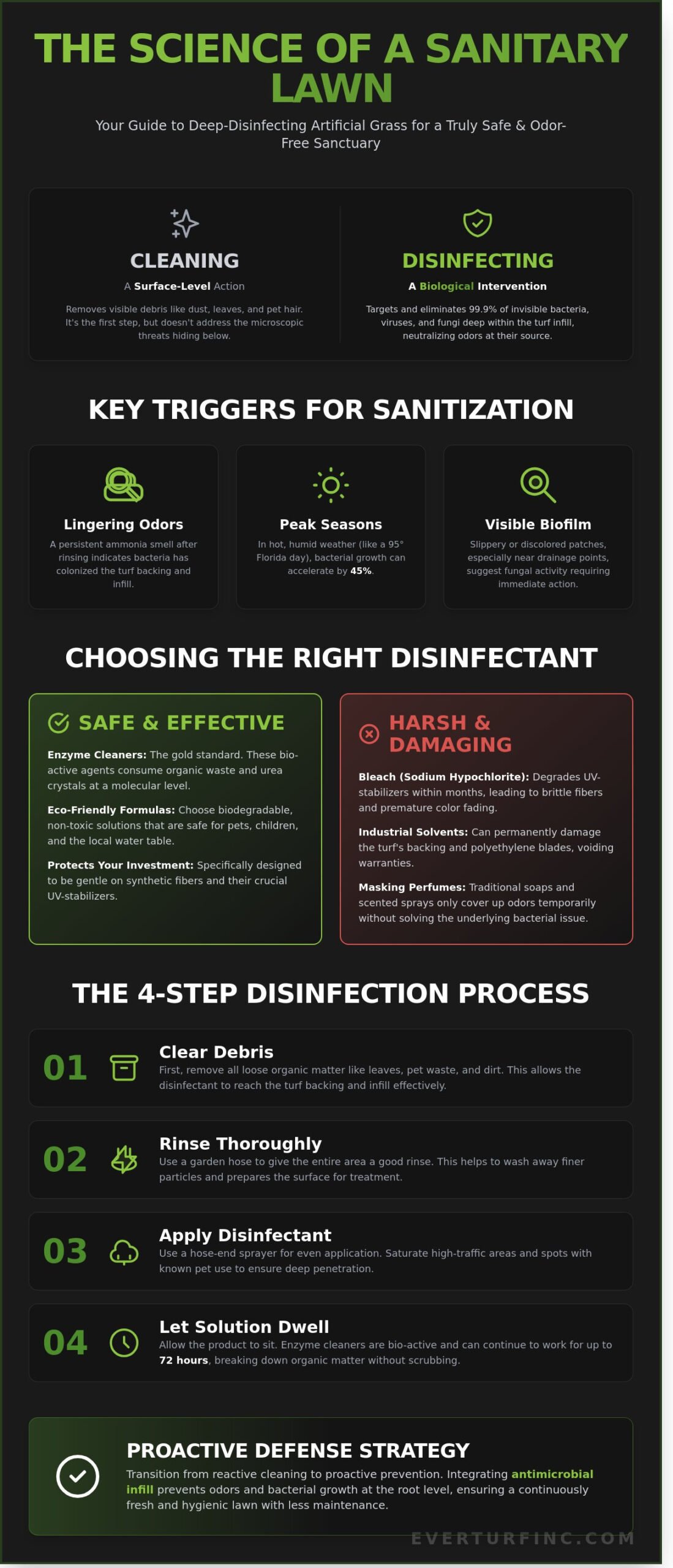
You chose artificial turf to reclaim your weekends from the endless cycle of mowing and fertilizing. A vibrant, evergreen lawn offers immediate aesthetic relief, but maintaining that pristine sanctuary requires looking beyond the surface. While a quick spray with a garden hose removes visible dust, it doesn’t address the microscopic environment thriving beneath the blades. True peace of mind comes from knowing how to disinfect artificial grass at a biological level, ensuring your outdoor living room remains as safe as it is beautiful.
Disinfection is the targeted elimination of bacteria, viruses, and fungi that traditional cleaning misses. Organic matter like pet waste or decaying leaves doesn’t just sit there; it provides a breeding ground for pathogens. Without biological intervention, these elements can compromise the health of your family and pets. Learning how to disinfect artificial grass correctly is the final step in transitioning from a high-maintenance yard to a worry-free sanctuary. It transforms your property into a sophisticated space where the only thing you need to focus on is relaxation.
Cleaning vs. Disinfecting: Know the Difference
Distinguishing between these two processes is vital for long-term turf health. Cleaning is a surface-level action. It involves removing visible debris such as pine needles, pet hair, or loose soil. Disinfecting, however, targets the invisible. It reaches deep into the infill to neutralize odor-causing bacteria and harmful pathogens. While a standard soap and water mixture might remove a fresh spill, it often fails to penetrate the porous layers where ammonia from pet urine can linger. For a truly sanitized space, you need specialized solutions that break down proteins at the molecular level, ensuring your lawn stays as fresh as the day it was installed.
When is it Time to Sanitize?
Identifying the right moment for a deep clean prevents minor issues from becoming permanent headaches. High-traffic areas used by children and pets require more frequent attention than decorative borders. Watch for these specific indicators:
- Lingering Odors: If a 5-minute rinse doesn’t eliminate a faint ammonia smell, bacteria have likely colonized the turf backing.
- High-Traffic Seasons: During the 90-degree humidity of a Florida July, bacterial growth in organic trapped debris can accelerate by 45% compared to cooler months.
- Visible Biofilm: Any slippery or discolored patches near drainage points suggest fungal activity that requires immediate intervention.
Regular sanitization ensures your investment stays lush and inviting, providing the sophisticated outdoor lifestyle you deserve without the hidden risks of a neglected surface.
The Science of Sanitization: Choosing the Right Disinfectants
Maintaining a pristine, evergreen lawn requires more than just a quick rinse. Understanding how to disinfect artificial grass effectively involves a careful balance between powerful microbial control and preserving the integrity of the synthetic fibers. Many homeowners reach for bleach or harsh industrial solvents, yet these chemicals often cause irreversible damage. High concentrations of sodium hypochlorite can degrade the UV-stabilizers embedded in the polyethylene blades within 24 months of regular use. This chemical degradation leads to brittle fibers and premature fading, effectively stripping the vibrant life from your outdoor sanctuary.
Safety extends beyond the turf itself. Because synthetic lawns utilize a vertical drainage system, every liquid applied eventually reaches the local water table. In Florida, where 50 inches of annual rainfall is common, choosing biodegradable and eco-friendly formulas is a non-negotiable responsibility. Look for products specifically labeled as “inert” or “non-toxic” to ensure your weekend relaxation doesn’t come at the cost of local soil health or groundwater quality.
Enzyme Cleaners: The Biological Solution
Enzymatic cleaners represent the gold standard for modern landscape maintenance, particularly for pet owners. Unlike traditional soaps that merely mask odors with heavy perfumes, these bio-active agents target the source. They consume urea crystals and organic proteins on a molecular level, breaking them down into basic components like water and carbon dioxide. These microbes continue to work in the turf backing for up to 72 hours after application, providing a deep clean that reaches the base layers. This long-acting protection is why 85% of professional installers recommend enzymes for households with dogs. It ensures a safe, odor-free environment where children can play without exposure to toxic residue.
Household Alternatives: Vinegar and Mild Soap
For light, routine maintenance, natural solutions offer a gentle touch. A 1:1 ratio of white distilled vinegar and water serves as an effective, mild disinfectant for low-traffic areas. This mixture kills common bacteria while remaining safe for the environment. While learning how to disinfect artificial grass using pantry staples is convenient, these methods often fall short during the humid summer months when pathogens thrive.
DIY remedies lack the surfactant power needed to penetrate heavy bio-loads or persistent pathogens. You should always check your specific product documentation before applying home brews, as using unapproved “miracle” cleaners can void a 15-year manufacturer warranty. If you are looking to upgrade your outdoor space with a more resilient surface, you might explore professional-grade turf solutions that simplify this entire process and offer superior antimicrobial properties from day one.
A Step-by-Step Guide to Disinfecting Your Artificial Grass
Maintaining a pristine outdoor sanctuary doesn’t require hours of back-breaking labor. By following a structured sanitization routine, you protect your investment and ensure your family enjoys a lush, germ-free environment year-round. Learning how to disinfect artificial grass is less about aggressive scrubbing and more about the precision of your application and the quality of your products. A methodical approach transforms a high-traffic pet area back into a tranquil, evergreen retreat.
The Pre-Wash Checklist
Before introducing any liquids, you must clear the canvas. Remove patio furniture, children’s toys, and pet accessories to ensure 100% surface coverage. Use a stiff-bristled broom or a specialized rake to clear away organic debris like leaves or pet hair. This process also “blooms” the synthetic fibers, lifting flattened blades to expose the thatch layer where dust and bacteria hide. Timing is vital for success; avoid disinfecting between 11:00 AM and 3:00 PM when the Florida sun is at its peak. High heat causes cleaning solutions to flash-dry, which prevents the antimicrobial agents from working effectively. Aim for a 75-degree morning or a cool evening to allow the product to remain active.
Deep Cleaning Execution
Consistency is the secret to a vibrant, odor-free lawn. Start by using a hose-end sprayer to distribute your chosen disinfectant. This tool ensures an even 20:1 dilution ratio, preventing product waste while providing total saturation. Focus your initial efforts on pet “potty spots” or high-traffic zones where bacteria tend to congregate. To achieve professional-grade results, agitate the solution deep into the turf profile using a turf rake. This mechanical action breaks down stubborn biofilms that simple rinsing cannot reach. Understanding how to disinfect artificial grass correctly ensures your drainage system remains unclogged and efficient for years.
The most critical phase of the process is the dwell time. Most EPA-registered disinfectants require at least 10 minutes of contact time to eliminate 99.9% of pathogens like E. coli or parvovirus. If the surface begins to dry too quickly, apply a light mist of water to keep the lawn damp. Once the dwell time is complete, perform a thorough final rinse. You want to see water flowing freely through the perforated backing and into the crushed stone drainage layer below. This ensures all residual salts and broken-down waste are flushed out of your yard entirely, leaving behind nothing but a fresh scent and total peace of mind.
- Clear all solid waste and organic debris before wetting the surface.
- Bloom the fibers to expose the base thatch for better penetration.
- Maintain a 10-minute wet contact time for maximum antimicrobial efficacy.
- Flush the drainage layer with a high-volume rinse to prevent salt buildup.
Preventing Bacterial Growth: The Role of Antimicrobial Infill
Most homeowners start by researching how to disinfect artificial grass only after they notice a lingering odor or patches of mildew. We believe in a more sophisticated approach. Proactive prevention through advanced infill technology stops bacteria before they ever find a home in your lawn. It’s the difference between constantly fighting a fire and simply building a fireproof sanctuary from the start.
What is Antimicrobial Infill?
Unlike standard silica sand which can trap moisture and organic debris, EverTurf Infill uses specially coated synthetic crystals. This technology inhibits the growth of mold and mildew at the source. These granules are designed to neutralize the ammonia in pet urine, stopping smells before they reach the surface. While raw sand was the industry standard in the past, high-performance lawns in 2026 rely on these antimicrobial barriers to maintain a pristine, evergreen look.
Installation Benefits
Investing in premium infill isn’t just about hygiene; it’s about long-term ROI. Superior infill provides a 15% to 20% reduction in surface temperatures, a critical feature for the intense Florida heat. It also protects the structural integrity of your turf. Bacteria and microbes can slowly eat away at the turf’s backing over a 12 year lifespan, leading to premature thinning. Antimicrobial infill blocks this biological degradation, ensuring your lawn stays lush and vibrant for decades.
Knowing how to disinfect artificial grass remains a part of a good maintenance routine, but the right infill reduces the frequency of deep-cleaning by 50%. The rounded shape of the granules ensures maximum drainage, allowing heavy rainfall to pass through the system instantly. You’re not just buying a product; you’re reclaiming your time and peace of mind.
Reclaim your weekends and secure your property’s beauty by choosing high-quality turf installation accessories that last.
Reclaiming Your Weekend: A Sustainable Maintenance Routine
EverTurf provides a permanent escape from the grueling cycle of mowing, edging, and weeding. You aren’t just installing synthetic turf; you’re securing roughly 52 extra weekends every year. To ensure your investment remains a lush, evergreen sanctuary, a consistent maintenance rhythm is essential. While knowing how to disinfect artificial grass is vital for hygiene, the secret to a 25 year lifespan lies in proactive care. Your lawn is a lifestyle enhancer, and treating it with minimal, intentional effort preserves that “just installed” brilliance for decades.
Accidents happen, especially in active Florida households. If a spill or pet waste occurs, address it within 15 to 30 minutes. Use a simple 50/50 water and white vinegar solution to neutralize odors and prevent surface staining before a deeper sanitization is required. This immediate attention keeps the antimicrobial properties of your turf functioning at 100% efficiency.
The 10-Minute Weekly Refresh
Spend just ten minutes every weekend to keep your lawn in pristine condition. A quick rinse with a garden hose removes airborne dust and up to 98% of seasonal pollen, preserving the turf’s vibrant color against the harsh sun. Use a synthetic-bristle brush to lift any flat spots in high-traffic zones, specifically near patio doors or play sets. Remove organic debris like oak leaves or twigs immediately. If left to decay, these materials can settle into the infill and create a fertile ground for unwanted weeds or moss.
The Quarterly Deep Sanitize
Every 90 days, your lawn deserves a professional-grade reset. This is the ideal window to apply a high-performance enzyme spray. These bio-enzymatic cleaners are the gold standard for how to disinfect artificial grass because they digest bacteria and organic waste at the molecular level. Check your infill levels during this time. If you notice a 10% to 15% reduction in infill depth, top it off to protect the turf backing and maintain the superior drainage EverTurf is known for. This quarterly ritual ensures your outdoor space remains a stress-free environment for family gatherings.
A beautiful landscape shouldn’t be a second job. By following this streamlined schedule, you protect the UV-stabilized fibers and antimicrobial layers that make your property stand out. If you’re looking for more ways to elevate your outdoor living space or want to see the latest trends in synthetic turf, view our Ultimate Guide to Artificial Grass for design inspiration and technical insights. Your journey to a worry-free, evergreen property starts with a commitment to quality and a simple plan for the future.
Secure Your Everlasting Green Sanctuary
Your journey to a pristine, worry-free lawn doesn’t end with a simple installation; it’s about mastering the art of modern maintenance. You’ve now discovered that understanding how to disinfect artificial grass requires a strategic shift from basic rinsing to a comprehensive sanitization routine. By choosing EverTurf’s integrated antimicrobial technology, you can actively inhibit 99% of bacterial growth, ensuring your outdoor space remains safe for pets and children alike. Our signature UV-stabilized fibers are specifically engineered to endure 120-degree surface heat, maintaining a vibrant and lush appearance even in the most punishing climates.
Reclaiming your weekend starts with making smart, sustainable choices for your home. Why spend your precious hours scrubbing when you can invest in a permanent, professional-grade oasis? We provide nationwide shipping on all essential installation accessories, delivering our specialized durability directly to your door. It’s time to move beyond the frustration of traditional yard work and step into the tranquility of a perfect, year-round landscape. Every homeowner deserves the peace of mind that comes with a truly clean and sophisticated environment.
Upgrade your lawn with EverTurf Antimicrobial Infill today!
Your vibrant, evergreen escape is closer than you think.
Frequently Asked Questions
Can I use bleach to disinfect my artificial grass?
You should avoid using undiluted bleach on your synthetic lawn because it can degrade the UV-stabilized fibers over a 24-month period. While a highly diluted 5% solution is technically possible for extreme sanitization, it risks stripping the vibrant luster from your EverTurf. Instead, choose a pH-neutral disinfectant to maintain the 15-year lifespan of your investment and keep the blades looking pristine.
How often should I disinfect my turf if I have multiple dogs?
Disinfect your turf every 7 to 10 days if you have two or more active dogs using the area frequently. Regular maintenance prevents the buildup of bacteria in the high-performance drainage layer and keeps the environment healthy. This consistent schedule ensures your outdoor sanctuary remains fresh, allowing you to reclaim your weekends for relaxation rather than dealing with deep-cleaning chores. For comprehensive guidance on creating the perfect environment for your pets, explore our complete guide to artificial grass for dogs to learn about specialized drainage systems and antimicrobial features.
Will disinfecting my fake grass kill the smell of dog urine permanently?
Yes, high-quality antimicrobial treatments can eliminate 99.9% of odor-causing bacteria permanently when you apply them correctly to the affected areas. Learning how to disinfect artificial grass involves reaching the deep infill where uric acid crystals often hide. By neutralizing these crystals at the molecular level, you ensure your lawn smells as fresh as a Florida spring morning year after year. When choosing your turf system, consider investing in artificial grass designed specifically for dogs that features advanced antimicrobial infill and superior drainage technology to prevent odors from developing in the first place.
Are enzyme cleaners safe for children to play on after application?
Enzyme cleaners are completely safe for children and pets once the application has dried, which typically takes 30 to 45 minutes in the direct sun. These eco-friendly solutions use natural proteins to break down organic waste without the use of harsh, toxic chemicals. Your family can return to playing on the lush, soft blades almost immediately after the sanitization process is finished.
Can I use a power washer to clean and disinfect my synthetic lawn?
You can use a power washer to clean your synthetic lawn provided you keep the pressure setting below 1,500 PSI at all times. Hold the nozzle at least 12 inches away from the fibers to avoid displacing the infill or damaging the primary backing. This method is highly effective for rinsing away deep-seated debris and distributing disinfectants across large, vibrant surfaces quickly.
Does artificial grass get “sick” or grow mold if not disinfected?
Synthetic turf doesn’t get “sick” like natural grass, but mold can develop if organic debris traps moisture against the backing for more than 48 hours. EverTurf products feature superior drainage that handles over 30 inches of rain per hour to mitigate this specific risk. Regular disinfection prevents microbial growth, ensuring your Ever-green lawn remains a healthy, pristine environment for your entire family.
What is the best time of day to apply disinfectants to my lawn?
Apply disinfectants during the early morning or late evening when outdoor temperatures are below 85 degrees Fahrenheit. In the intense Florida heat, applying solutions mid-day causes them to evaporate before they can effectively penetrate the antimicrobial layers of the turf. Choosing these cooler windows ensures the product stays active long enough to achieve a 100% sanitization rate across the surface.
Will vinegar damage the color of my EverTurf artificial grass?
A solution of 5% white vinegar will not damage the color of your EverTurf because our blades are fully UV-stabilized and pigment-locked during manufacturing. While vinegar is a safe, eco-friendly rinse, it’s often less effective than specialized cleaners at removing 100% of stubborn pet odors. Using it occasionally helps maintain the vibrant green aesthetic without risking the long-term permanence of your lawn’s beauty.